August 2026

North America News
The California Department of Toxic Substances Control (DTSC) officially added para-Phenylenediamine (PPD) derivatives to its Candidate Chemicals List. This administrative step does not immediately impose new requirements. The DTSC will now evaluate consumer products containing PPD derivatives for potential future regulatory action.
The Department of Toxic Substances Control (DTSC) in the state of California added para-Phenylenediamine (PPD) derivatives to its Candidate Chemicals List on 3 July 2026, with an effective date of 3 October 2026. This action was taken to address potential environmental exposures. Placing the entire chemical class on the Candidate Chemicals List under the Safer Consumer Products program establishes the foundation for future action, similar to evaluations required under California Proposition 65. This prevents manufacturers from substituting 6PPD with another harmful PPD derivative without evaluating the environmental trade-offs.
Currently, no specific consumer products are subject to new compliance requirements. However, economic operators must inventory their supply chains for all PPD derivatives to prepare for future compliance obligations.
In Canada, when hazards are identified in consumer products, they will be recalled and published in the Recalls and Safety Alerts Database on the Health Canada website, which is updated daily. The Canada recalls from 01 July 2026 to 31 July 2026 are summarized below:
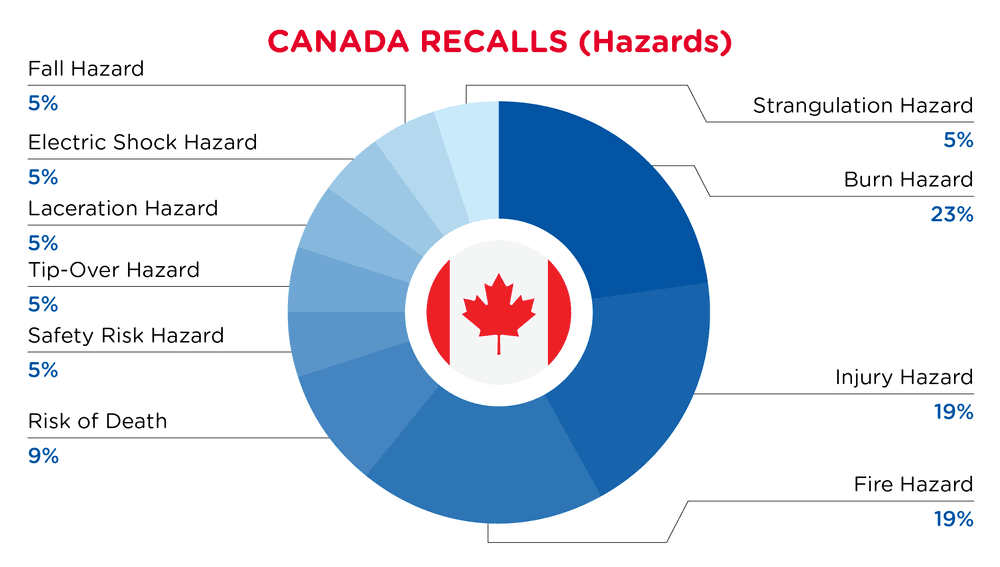
| Hazards | Frequency |
|---|---|
| Burn Hazard | 5 |
| Injury Hazard | 4 |
| Fire Hazard | 4 |
| Risk of Death | 2 |
| Safety Risk Hazard | 1 |
| Tip-Over Hazard | 1 |
| Laceration Hazard | 1 |
| Electric Shock Hazard | 1 |
| Fall Hazard | 1 |
| Strangulation Hazard | 1 |
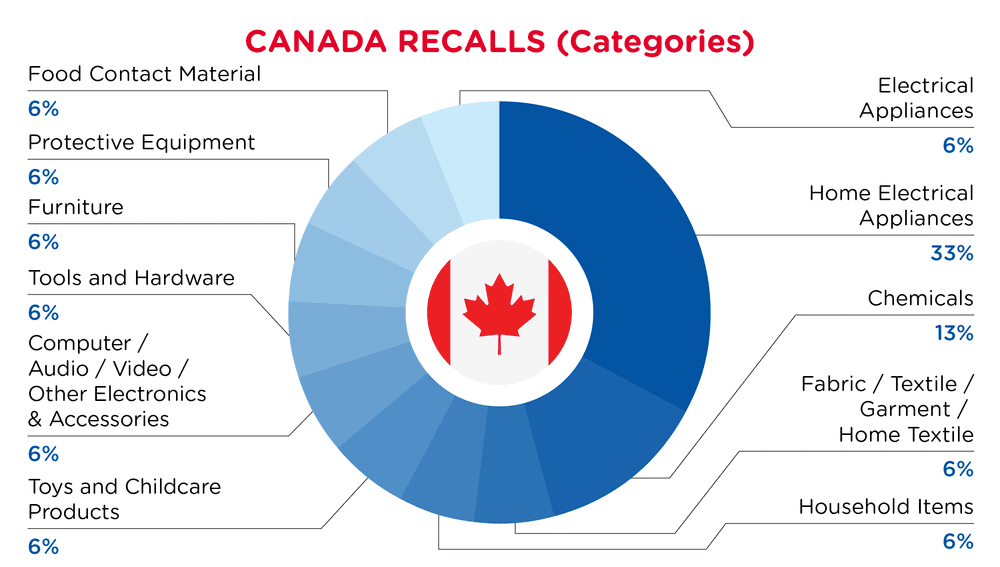
| Product Categories | Frequency |
|---|---|
| Home Electrical Appliances | 4 |
| Chemicals | 2 |
| Fabric / Textile / Garment / Home Textile | 1 |
| Household Items | 1 |
| Toys and Childcare Products | 1 |
| Computer / Audio / Video / Other Electronics & Accessories | 1 |
| Tools and Hardware | 1 |
| Furniture | 1 |
| Protective Equipment | 1 |
| Food Contact Material | 1 |
| Electrical Appliances | 1 |
For a complete list, click here.
In the US, when hazards are identified in consumer products, they will be recalled and published in the Consumer Product Safety Commission (CPSC) Recent Recalls on the CPSC website, which is updated daily. The US recalls from 01 July 2026 to 31 July 2026 are summarized below:
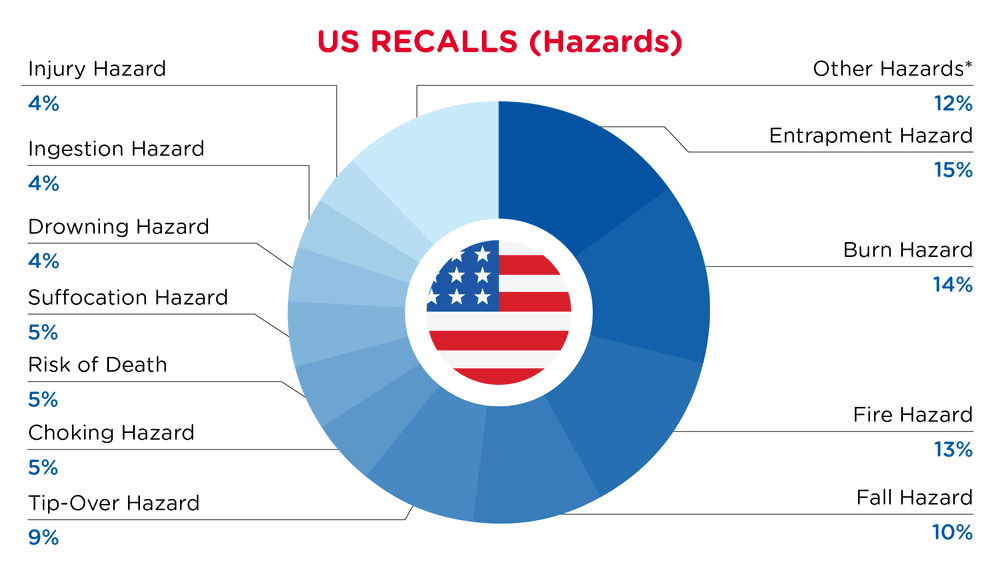
| Hazards | Frequency |
|---|---|
| Entrapment Hazard | 16 |
| Burn Hazard | 15 |
| Fire Hazard | 14 |
| Fall Hazard | 11 |
| Tip-Over Hazard | 10 |
| Choking Hazard | 6 |
| Risk of Death | 5 |
| Suffocation Hazard | 5 |
| Drowning Hazard | 4 |
| Ingestion Hazard | 4 |
| Injury Hazard | 4 |
| Other Hazards* | 13 |
*Other Hazards include Explosion Hazard, Electric Shock Hazard, Chemical Hazard, Poisoning Hazard, Laceration Hazard, Crash Hazard and Lead Poisoning Hazard with a frequency of less than 4.
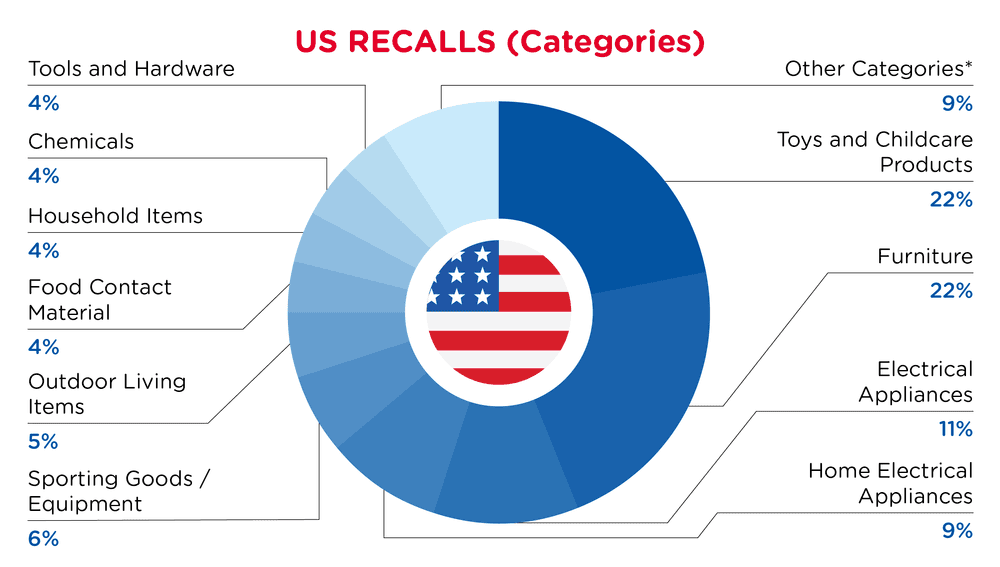
| Product Categories | Frequency |
|---|---|
| Toys and Childcare Products | 12 |
| Furniture | 12 |
| Electrical Appliances | 6 |
| Home Electrical Appliances | 5 |
| Sporting Goods / Equipment | 4 |
| Outdoor Living Items | 3 |
| Household Items | 2 |
| Tools and Hardware | 2 |
| Chemicals | 2 |
| Food Contact Material | 2 |
| Other Categories* | 5 |
*Other Categories include Computer / Audio / Video / Other Electronics & Accessories, Footwear, Machinery, Bodycare / Cosmetics and Fabric / Textile / Garment / Home Textile with a frequency of less than 2.
For a complete list, click here.
Europe News
The Packaging and Packaging Waste Regulation (PPWR) (Regulation (EU) 2025/40) entered into force on 11 February 2026 and applies across the European Union (EU), beginning 12 August 2026. Under Article 5 of the PPWR, Regulation EU 2025/40, manufacturers must minimize Substances of Concern (SoCs) in packaging. Aside from established rules for heavy metals and per- and polyfluoroalkyl substances (PFAS), a definitive SoC list does not yet exist.
In July, the European Chemicals Agency (ECHA) invited various packaging stakeholders who had previously provided feedback on the PPWR call to review and comment on the draft list of SoCs under the PPWR.
The draft list contains more than 700 substances identified as SoCs, selected from around 2600 substances found in packaging or packaging waste. The assessment covers both intentionally added substances such as adhesives, coatings, inks, pigments, colorants, antioxidants and other additives, and non-intentionally added substances formed during the production, use or recycling of packaging materials.
ECHA requested the stakeholders provide feedback on:
The current use of the substance in question in packaging applications: a positive confirmation (or otherwise) of the substance use in packaging materials, types and formats listed
Whether the substance is an intentionally added substance (IAS) or not
The packaging material/type/ format the substance is used in
The technical function of the substance
QIMA will continue to monitor PPWR developments and their potential impacts.
On 11 August 2026, the European Commission (EC) published a draft directive proposing significant amendments to Annex II of the Toy Safety Directive (2009/48/EC), establishing stricter control standards for allergenic fragrances, bisphenol A (BPA), phenol, and benzisothiazolinone (BIT) in toys. The draft is currently open for public consultation, with stakeholders invited to submit comments by 10 October 2026.
Proposed changes:
1. The fragrance Lilial (2-(4-tert-butylbenzyl)propionaldehyde, CAS 80-54-6) is proposed to be removed from the list of “permitted but subject to labeling requirements” and transferred to the prohibited substances list, due to its classification as toxic for reproduction.
2. The old standards EN 71-10/11/12 in the 2009/48/EC Appendix C will be removed and replaced with the new standards. Limit of BPA will be reduced from 0.04 mg/L to 0.005 mg/L, which is aligned with the Toy Safety Standard (Regulation (EU) 2025/2509). The significant reduction in the permitted migration limit for BPA is based on a 2023 European Food Safety Authority (EFSA) scientific opinion.
| Substance Name | CAS Number | Proposed Limit | Reference Standards |
|---|---|---|---|
| Bisphenol A (BPA) | 80-05-7 | 0.005mg/l (migration limit) | EN 71-19 |
| 1,2-benzisothiazol-3(2H)-one (BIT) | 2634-33-5 | 5 mg/kg (content limit) in aqueous toy materials | EN 71-17 |
| Phenol | 108-95-2 | 5 mg/l (migration limit) in polymeric materials 10 mg/kg (content limit) as a preservative | EN 71-18 |
According to the draft European Commission (EC) schedule, the revision would be entered into force in Q4 2026. Member States are required to transpose the directive into national legislation within 12 months of its publication, and the new rule will be formally effective 12 months after publication.
The Swedish government issued a memorandum to propose a national ban on per- and polyfluoroalkyl substances (PFAS) in certain consumer products by 1 January 2028. If adopted, the proposed ban would place Sweden alongside Denmark and France among European Union (EU) Member States that have introduced national measures targeting PFAS ahead of a comprehensive EU-wide restriction.
The scope and proposed limit values are as follows:
| Scope | Requirement | Proposed effective date |
|---|---|---|
| Clothing and footwear Impregnating agents for clothing and footwear Cosmetics Food contact kitchen utensils Ski waxes | < 25 µg/kg (ppb) for individual non-polymeric PFAS < 250 µg/kg (ppb) for the sum of non-polymeric PFAS, including those from degradation of precursors < 50 mg/kg (ppm) for the sum of all PFAS | 1 January 2028 |
The proposed concentration limits are aligned with those being considered under the broader EU PFAS restriction proposal under the Registration, Evaluation, Authorisation and Restriction of Chemicals (REACH) regulation, reflecting Sweden's intention to maintain consistency with the anticipated EU regulatory framework.
The proposal also outlines exemptions, including the following, to balance the environmental protection with circular economy and safety needs:
Recycled materials
Personal protective equipment (PPE)
Second-hand goods
The proposed restriction is intended to serve as an interim national measure pending the development and adoption of a broader EU-wide PFAS restriction under REACH. Sweden has indicated that the national ban would be withdrawn upon the entry into force of equivalent EU legislation.
In Europe, when hazards are identified in non-food consumer products, the products will be recalled and published in the Safety Gate system, which is updated weekly. The European recalls from 01 July 2026 to 31 July 2026 are summarized below:
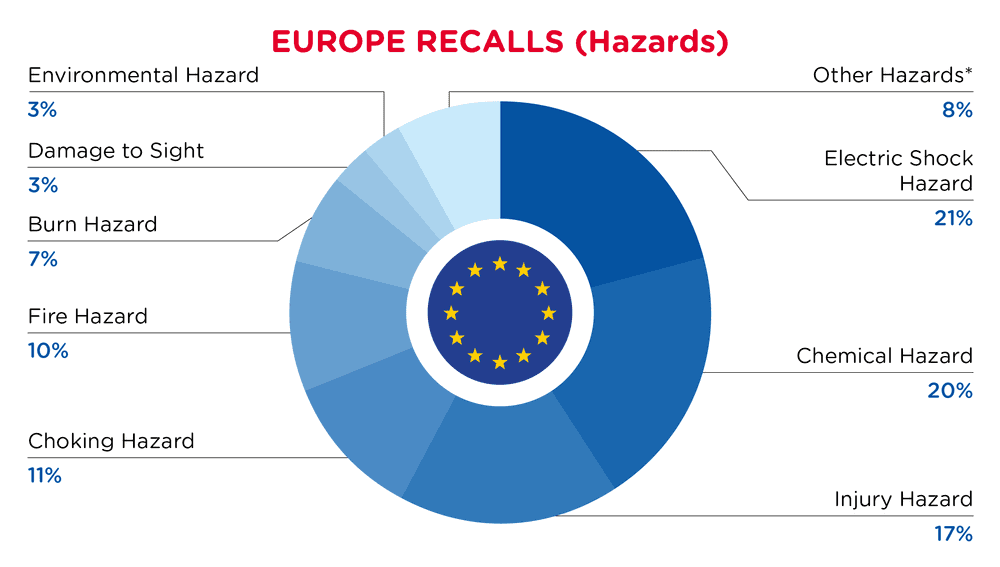
| Hazards | Frequency |
|---|---|
| Electric Shock Hazard | 49 |
| Chemical Hazard | 48 |
| Injury Hazard | 40 |
| Choking Hazard | 27 |
| Fire Hazard | 24 |
| Burn Hazard | 17 |
| Damage to Sight | 8 |
| Environmental Hazard | 7 |
| Other Hazards* | 19 |
*Other Hazards include Health Risk Hazard, Suffocation Hazard, Drowning Hazard, Strangulation Hazard, Entrapment Hazard and Cut Hazard with a frequency of less than 7.
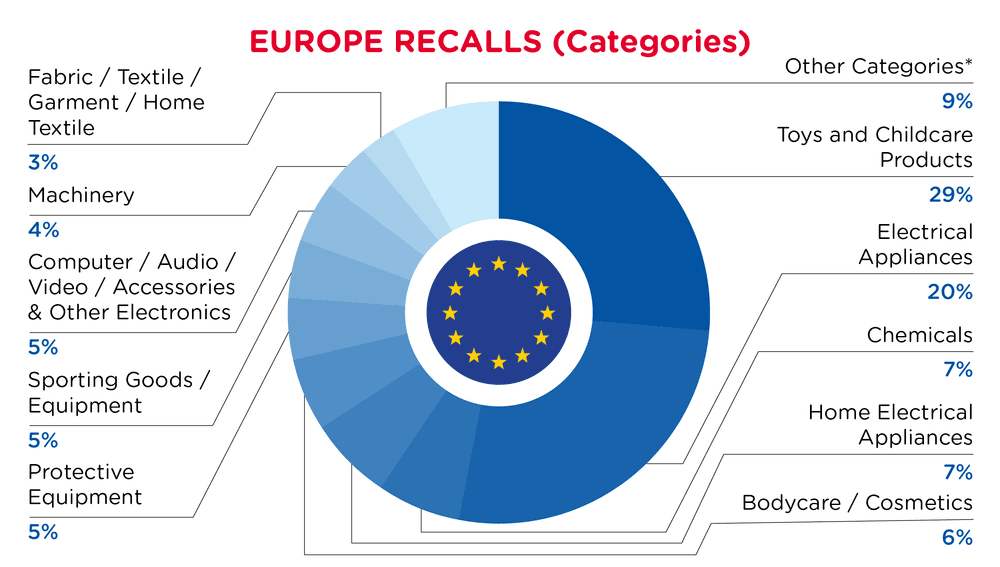
| Product Categories | Frequency |
|---|---|
| Toys and Childcare Products | 59 |
| Electrical Appliances | 41 |
| Chemicals | 15 |
| Home Electrical Appliances | 14 |
| Bodycare / Cosmetics | 12 |
| Protective Equipment | 10 |
| Sporting Goods / Equipment | 9 |
| Computer / Audio / Video / Other Electronics & Accessories | 9 |
| Machinery | 8 |
| Fabric / Textile / Garment / Home Textile | 6 |
| Other Categories* | 17 |
*Other Categories include Food Contact Material, Accessories, Pet Items, Outdoor Living Items, Household Items, Furniture, Tools and Hardware, Stationery, Jewelry and Car Accessorieswith a frequency of less than 6.
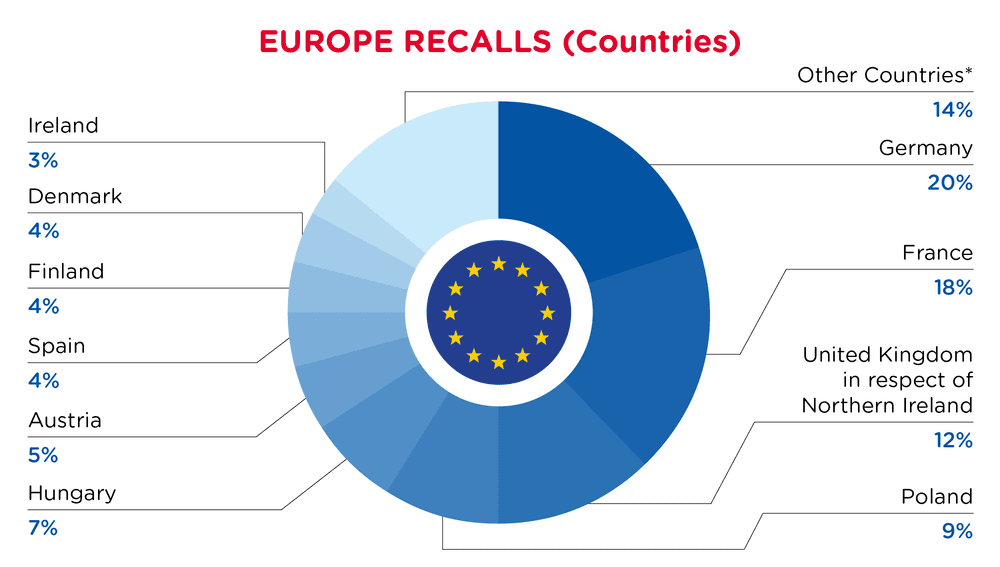
| Notifying Country | Frequency |
|---|---|
| Germany | 40 |
| France | 37 |
| United Kingdom in respect of Northern Ireland | 25 |
| Poland | 18 |
| Hungary | 14 |
| Austria | 9 |
| Spain | 8 |
| Finland | 8 |
| Denmark | 8 |
| Ireland | 6 |
| Other Countries* | 27 |
*Other Countries include Cyprus, Bulgaria, Croatia, Czechia, Slovakia, The Netherlands and Luxembourg with a frequency of less than 6.
For a complete list, click here.
Asia News
The Certification and Accreditation Administration of China (CNCA) published the Implementation Rules for Compulsory Product Certification on Toys (Trial) (No. CNCA-C22-02:2026) on 31 May 2026, applicable to electric toys, plastic toys, metal toys, and ride-on vehicles designed or intended for use by children under 14.
The rules do not apply to chemical experiment toys, olfactory/taste/cosmetic play sets, home swings/slides, paper/bamboo/wooden/plush toys without electric components, semi-finished products, or non-toy products with child-appealing elements (like student stationery or food packaging).
Relative to the certification process, certification bodies and laboratories must continuously fulfil impartiality, risk management, and confidentiality regulations. Factory inspectors must not exceed 180 days of on-site inspection/auditing per year. Laboratories must implement video recording setups to fully document foreseeable reasonable abuse testing (under standard GB 6675.2 which specifies the mechanical and physical properties required for children's toys). Both certification records and laboratory testing records/type-test reports must be securely retained for at least 10 years.
Certification applicants must possess valid business registrations and must not be blacklisted or ordered to suspend production, and manufacturers must establish user complaint management systems and fully open these records to the certification body.
The certification process relies heavily on the latest editions of national safety standards:
GB 6675.1: Basic Code for Toy Safety.
GB 6675.2: Mechanical and Physical Properties.
GB 6675.3: Flammability.
GB 6675.4: Migration of Certain Elements.
GB/T 19865: Electric Toy Safety (where Chapter 19 "Radiation and Similar Hazards" is exempt from lab testing but remains under the producer's design responsibility).
The foundational baseline mode is Type Test + Initial Factory Inspection + Post-Certification Supervision.
Certification bodies categorize manufacturers into a specific Class, based on quality performance, inspection history, and regulatory feedback over a rolling 2-year period:
Class A: No non-conformities found in audits/market sampling; all provincial/national inspection scores are "pass"; key processing steps are owned natively in-house. (Supervision: On-site inspection + site/port sampling once a year).
Class B: Default category for new applicants or general producers. (Supervision: On-site inspection + site/port sampling twice a year).
Class C: Issues identified in quality checks but falling short of certificate suspension. (Supervision: Unannounced on-site inspection + sampling twice a year).
Class D: Failed factory audits, major confirmed product quality complaints, or serious non-conformities leading to suspended/revoked certificates. (Supervision: Unannounced on-site inspection + sampling three times a year, plus potential market sampling).
Specific to Type Testing & Samples:
Applicants can freely choose from qualified, designated laboratories.
Identical products made by different manufacturers must be sampled separately for type testing. Conversely, if different brand owners use the same manufacturer for identical items, testing a single sample unit is sufficient.
Tested samples must be retained for at least 12 months post-evaluation.
China Compulsory Certification (CCC) certificates for toys are valid for a maximum duration of 5 years. Extension applications should be submitted at least 90 days before expiration.
Standard-size or molded/printed CCC marks must be attached visibly on the exterior or nameplate of the product. If restricted by dimensions, it must be appended to the smallest retail unit pack or attached to the documentation. Fees must be paid directly by the client or producer to the certification body or lab; third-party payments are explicitly disallowed.
The rules will take effect on 1 November 2026.
In China, when hazards are identified in consumer products, they will be recalled and published in the SAMR Defective Product Administrative Centre, which is updated daily. The China recalls from 01 July 2026 to 31 July 2026 are summarized below:
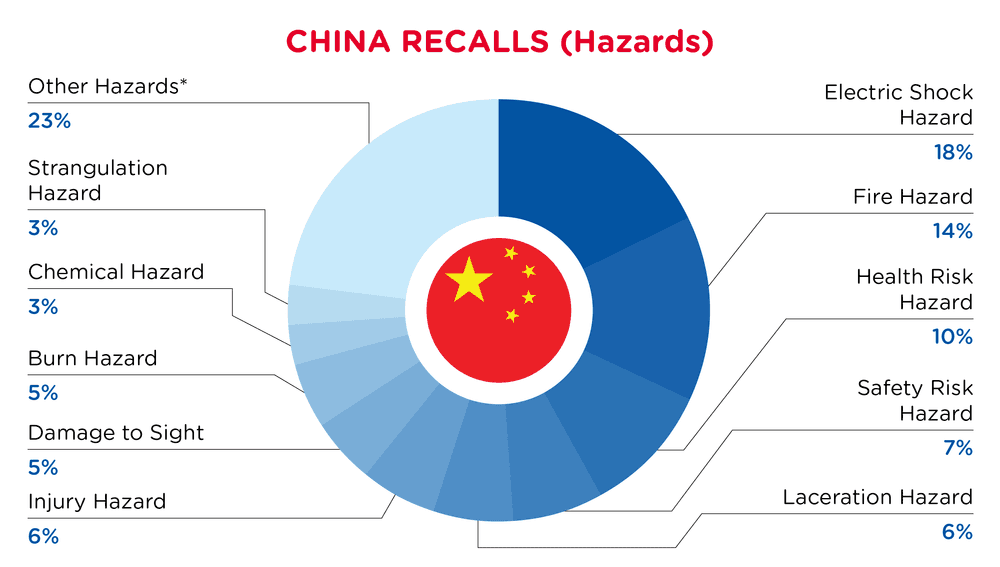
| Hazards | Frequency |
|---|---|
| Electric Shock Hazard | 22 |
| Fire Hazard | 17 |
| Health Risk Hazard | 12 |
| Safety Risk Hazard | 8 |
| Laceration Hazard | 7 |
| Injury Hazard | 7 |
| Damage to Sight | 6 |
| Burn Hazard | 6 |
| Chemical Hazard | 4 |
| Strangulation Hazard | 4 |
| Other Hazards* | 28 |
*Other Hazards include Entanglement Hazard, Poisoning Hazard, Choking Hazard, Explosion Hazard, Suffocation Hazard, Damage to Hearing, Crash Hazard, Fall Hazard, Entrapment Hazard, Damage to Skin, Impact Hazard, Tip-Over Hazard, Puncture Hazard and Carbon Monoxide Poisoning Hazard with a frequency of less than 4.
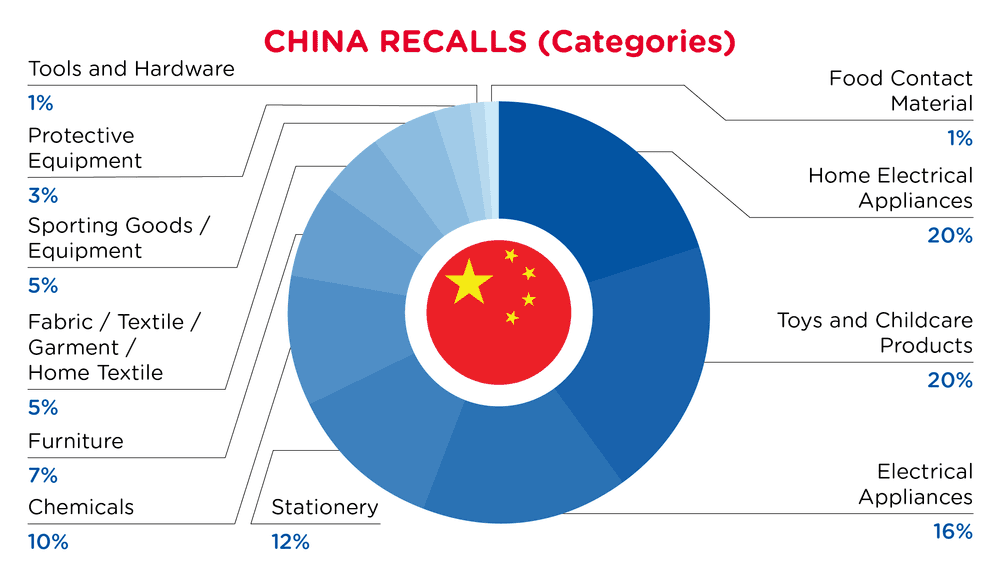
| Product Categories | Frequency |
|---|---|
| Home Electrical Appliances | 16 |
| Toys and Childcare Products | 16 |
| Electrical Appliances | 13 |
| Stationery | 10 |
| Chemicals | 8 |
| Furniture | 6 |
| Fabric / Textile / Garment / Home Textile | 4 |
| Sporting Goods / Equipment | 4 |
| Protective Equipment | 2 |
| Tools and Hardware | 1 |
| Food Contact Material | 1 |
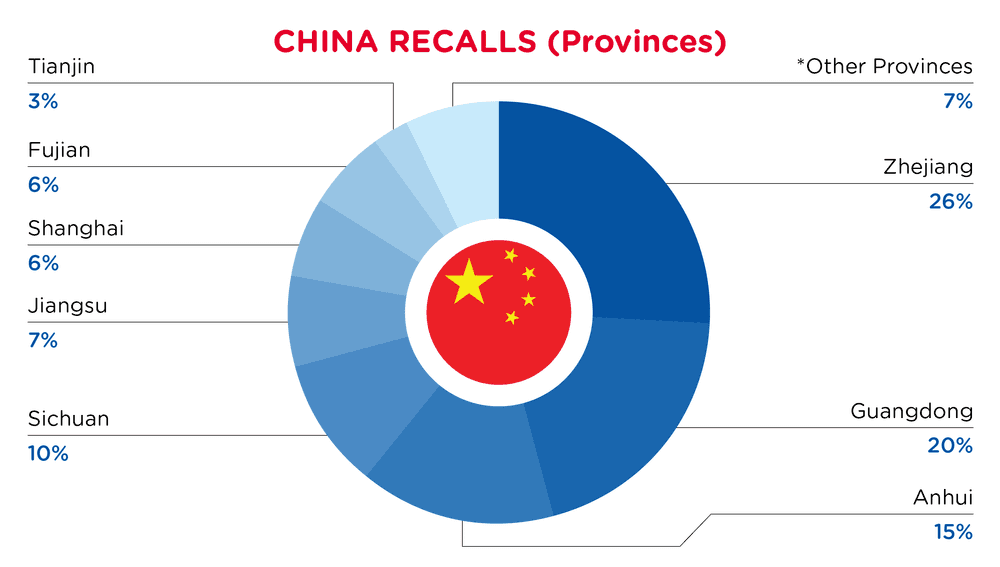
| Provinces | Frequency |
|---|---|
| Zhejiang | 21 |
| Guangdong | 16 |
| Anhui | 12 |
| Sichuan | 8 |
| Jiangsu | 6 |
| Shanghai | 5 |
| Fujian | 5 |
| Tianjin | 2 |
| *Other Provinces | 6 |
*Other Provinces include Hubei, Hunan, Henan, Liaoning, Beijing and Shanxi with a frequency of less than 2.
For a complete list, click here.
Australia/New Zealand News
In Australia, when hazards are identified in consumer products, they will be recalled and published in the Recalls and Safety Alerts Database on the Australian Competition & Consumer Commission website, which is updated daily. The Australia recalls from 01 July 2026 to 31 July 2026 are summarized below:
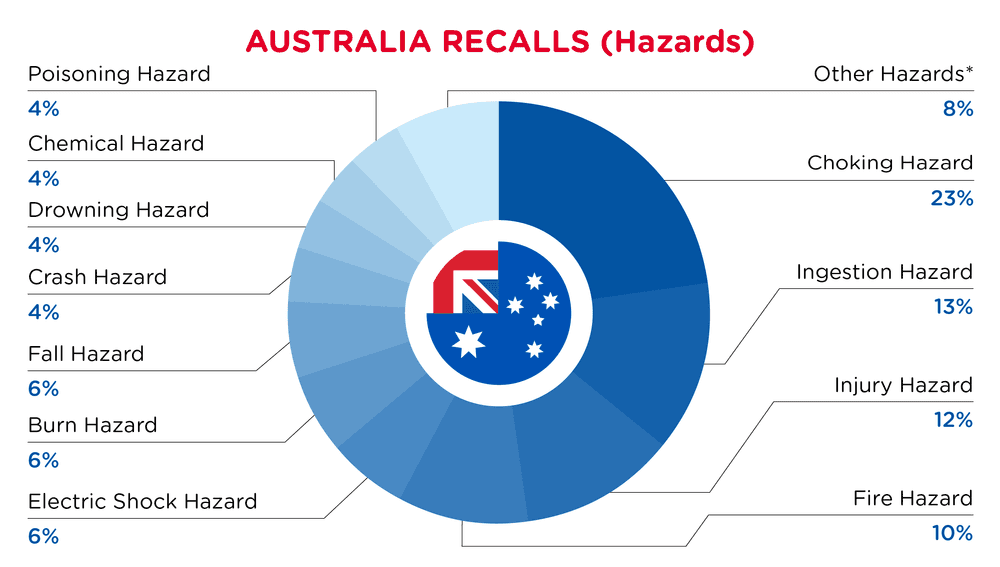
| Hazards | Frequency |
|---|---|
| Choking Hazard | 12 |
| Ingestion Hazard | 7 |
| Injury Hazard | 6 |
| Fire Hazard | 5 |
| Electric Shock Hazard | 3 |
| Burn Hazard | 3 |
| Fall Hazard | 3 |
| Crash Hazard | 2 |
| Drowning Hazard | 2 |
| Chemical Hazard | 2 |
| Poisoning Hazard | 2 |
| Other Hazards* | 4 |
*Other Hazards include Crushing Hazard, Risk of Death, Damage to Sight and Damage to Skin with a frequency of less than 2.
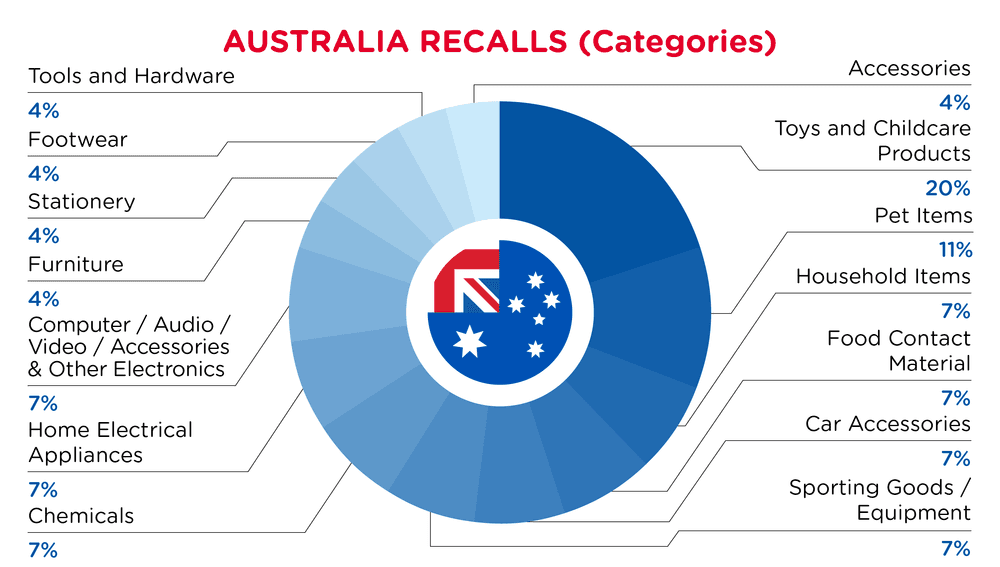
| Product Categories | Frequency |
|---|---|
| Toys and Childcare Products | 6 |
| Pet Items | 3 |
| Household Items | 2 |
| Food Contact Material | 2 |
| Car Accessories | 2 |
| Sporting Goods / Equipment | 2 |
| Chemicals | 2 |
| Computer / Audio / Video / Other Electronics & Accessories | 2 |
| Home Electrical Appliances | 2 |
| Furniture | 1 |
| Stationery | 1 |
| Footwear | 1 |
| Tools and Hardware | 1 |
| Accessories | 1 |
For a complete list, click here.
Subscribe to our Regulatory Updates
Unsubscribe at any time. Read our privacy policy.