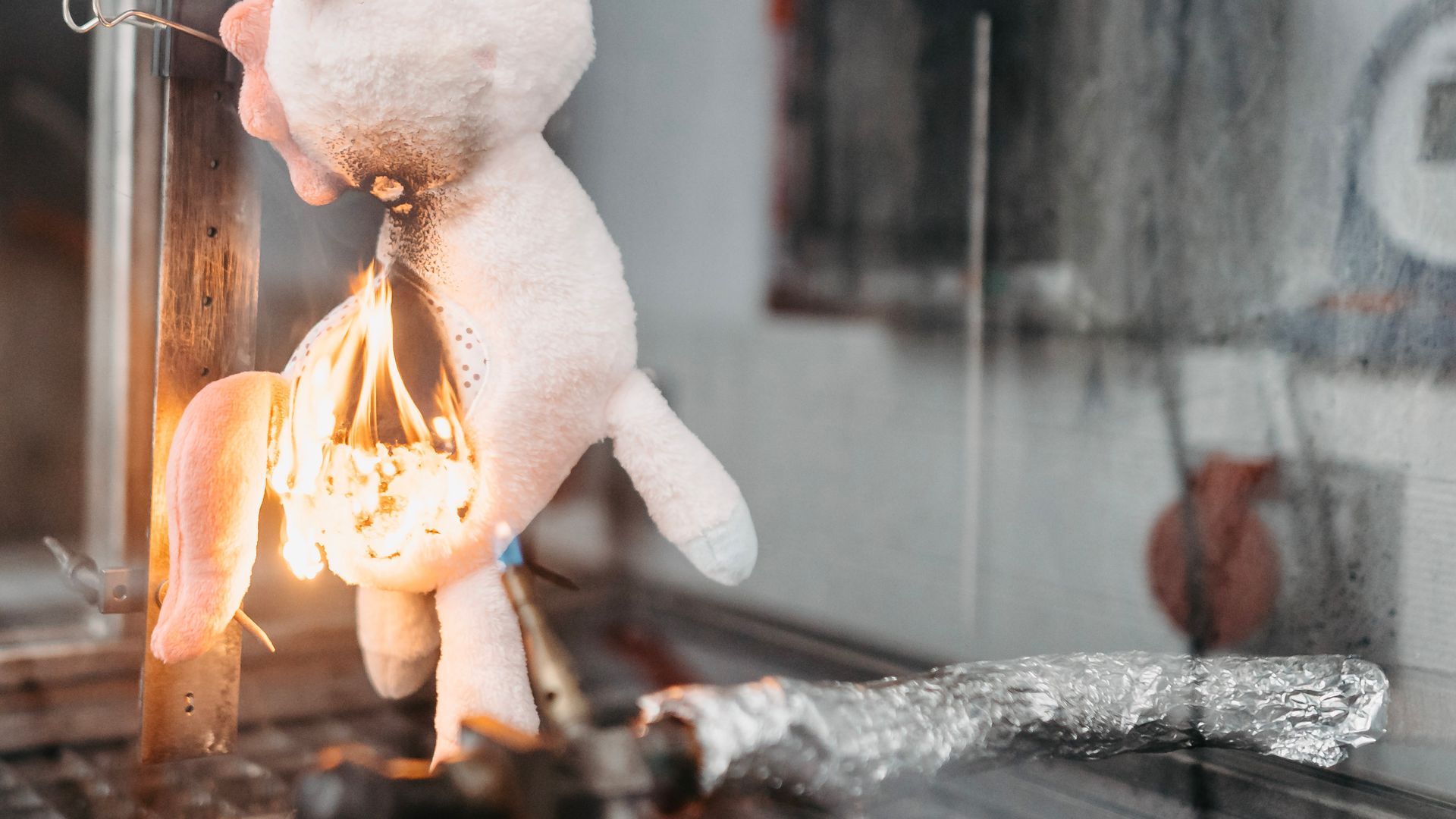
⚠ The Wrong Flammability Test Is as Dangerous as No Test at All
Flammability regulations vary significantly by product category, material type, and destination market, and these differences are critical. For example, children’s sleepwear compliant with EU EN 1103 may still fail US 16 CFR 1615 requirements. Upholstered furniture that passes UK BS 5867 may not meet California’s NFPA 260A criteria. A single product sold across multiple markets can therefore require distinct and separate test protocols.
Brands that test against the wrong standard risk shipping non-compliant products and only discovering issues when a market authority intervenes.
Flammability is one of the few product safety categories where non-compliance can carry both commercial and legal consequences. A product that ignites faster than permitted can trigger CPSC mandatory recalls in the United States, Safety Gate notifications across the EU, and potential liability for the importer of record. In fire-related incidents, regulatory escalation is often immediate.
The cost of correct flammability testing is minimal compared to the financial, legal, and reputational impact of failure.
Why QIMA for Flammability Testing?
Test to the right standard for every market, first time: QIMA regulatory experts identify the exact flammability standards required for your product category and destination market before testing begins. This reduces the risk of retesting and helps prevent compliance issues at the border.
ISO/IEC 17025-accredited results accepted by regulators: QIMA flammability testing is conducted in accredited laboratories. Reports meet evidentiary requirements for the CPSC in the United States, EU market surveillance authorities, and equivalent bodies across Asia, Australia, and Canada.
Complete flammability coverage under one roof: From children’s sleepwear under 16 CFR 1615 to polymers in electronic appliances, toys, and upholstered furniture, QIMA covers the full range of flammability-regulated product categories. One partner manages the entire testing program.
Global lab network across 100+ countries: Wherever products are manufactured or sold, QIMA provides accredited local testing with globally recognized reporting, reducing delays caused by cross-border sample shipping.
Ranked #1 for customer satisfaction: More than 30,000 clients trust QIMA to manage testing programs. Independent NPS measurement ranks QIMA #1 in the industry for customer satisfaction.
How Flammability Testing Works
Step 1: Tell us your product and target markets
Share your product category, material composition, and target markets. QIMA regulatory experts identify the exact flammability standards that apply, ensuring testing aligns with the correct requirements from the outset.
Step 2: Test plan confirmed
QIMA prepares a detailed testing plan outlining applicable standards, test methods, and sample requirements. This eliminates ambiguity, avoids unnecessary testing, and ensures full coverage.
Step 3: Samples submitted to your nearest accredited lab
Samples are sent to the closest QIMA ISO/IEC 17025-accredited laboratory. The global lab network enables local testing regardless of where products are manufactured or sold.
Step 4: Testing conducted under accredited conditions
Samples are tested against all required flammability standards in controlled laboratory environments, including fire resistance, flame spread, reaction to fire, and flashpoint, as applicable to the product and target markets.
Step 5: Full report delivered
You receive a complete test report with clear pass or fail results per standard and per market. Reports meet regulatory evidentiary requirements globally and are delivered through the QIMA platform for immediate access.
ISO/IEC 17025-Accredited Flammability Testing. Right Standard, Right Market, First Time
QIMA covers 25+ flammability standards across the US, EU, UK, Asia, and beyond. Tell us your product and target markets, we'll identify the exact tests you need.
Flammability Testing Across Every Product Category
From children's sleepwear to industrial polymers, QIMA covers the full range of product categories subject to flammability regulation across all major global markets.
Clothing textiles, including children's sleepwear
Carpets and rugs
Drapes, curtains, and drapery linings
Upholstered furniture and bedding
Polymers and plastics used in electronic products and appliances
Toys and juvenile products
Building and interior furnishing materials
Marine textiles and films
What Flammability Testing Measures and Why It Matters
Flammability regulations don't test whether a product can catch fire, everything can. They test whether it burns too fast, too intensely, or in ways that give people too little time to react. QIMA tests against the four parameters regulators use to make that determination:
Fire Resistance: The material's capacity to resist or withstand fire
Flame Spread: How flames move away from the ignition source across the sample's surface, analysing flame propagation potential
Reaction to Fire: The degree to which a product contributes to the intensity or spread of fire upon exposure to flames
Flashpoint: The minimum temperature at which combustible liquids ignite
Flammability Testing Standards by Market
Use this list to identify the standards that apply to your product and destination markets. Not sure which apply? Our regulatory team will confirm the right tests for your product — Get a quote.
| Market | Standard | Product Category |
|---|---|---|
| United States | 16 CFR 1615 & 1616 | Children's sleepwear |
| United States | 16 CFR 1610 | Clothing textiles (general) |
| United States | NFPA 701 / 260A / NFPA 255 / ASTM E 84 | Furniture & furnishings |
| United States | ASTM F963 | Toys |
| Europe | EN 1103 | |
| Europe | EN 1021 Part 1 & 2 | Upholstered furniture |
| Europe | EN 71-2 | Toys |
| Europe | EN 13773 | Textiles and curtains |
| UK | BS 5867 Part 2 Type B & C | Curtains and drapes |
| China | GB/T 14644 | |
| China | GB 6675 | Toys |
| China | GB 20286 | Public interior furnishings |
| Japan | JIS L1091 | Textiles |
| Japan | DT 2016 | |
| Taiwan | CNS 10285 L3196 | |
| Taiwan | CNS 4797 | |
| Australia & New Zealand | AS 1530 | Building materials |
| Australia & New Zealand | AS 3744.2 | Furniture |
| Australia & New Zealand | AS/NZS ISO 8124 | Toys |
| Canada | CAN/ULC-S109 | Textiles |
| Canada | SOR/2016-194 | |
| Canada | SOR/2011-17 | |
| International | ISO 6941 | Textiles (vertical flame spread) |
| International | IMO FTPC P7 | Marine textiles and films |
Trusted by 30,000 Brands to Get Testing Right
30,000
Clients worldwide
100+
Countries covered
6,000+
Field and lab experts
72
Net Promoter Score
QIMA flammability testing is conducted in ISO/IEC 17025-accredited laboratories across our global network — delivering results accepted by the CPSC, EU market surveillance authorities, and regulatory bodies in Asia, Australia, and Canada.
Frequently Asked Questions
1. How much does flammability testing cost?
Pricing depends on the number of applicable standards, product category, and test complexity. QIMA provides fixed-fee quotes with no hidden costs. You can request a quote online and typically receive pricing within 24 hours. Multi-market testing programs are usually more cost-effective when managed through a single provider.
2. How long does flammability testing take?
Turnaround times vary depending on the standard and product category. QIMA confirms timelines during test plan approval before samples are shipped. Any standards with longer lead times are flagged in advance to support production planning.
3. How do I know which flammability standard applies to my product?
It depends on product category, material type, and destination market. QIMA regulatory experts determine the applicable standards before testing begins to ensure compliance with the correct requirements. A regulatory pre-assessment can also be provided if needed.
4. I sell in multiple markets. Do I need separate tests for each?
Sometimes. Some standards are market-specific, while others can cover multiple regions. QIMA designs multi-market test plans to minimize duplication and identify the most efficient testing sequence across all target markets.
5. What happens if my product fails flammability testing?
You receive a detailed failure report identifying the exact requirement not met and the reason for failure. Most issues relate to material composition or construction and can be corrected and retested. QIMA technical teams provide corrective guidance, and only affected tests are repeated after modifications.
6. Are flammability requirements stricter for children’s products?
Yes. Children’s sleepwear and toys are subject to some of the strictest flammability standards globally, including 16 CFR 1615/1616 in the United States and EN 71-2 in Europe. QIMA specializes in children’s product compliance and confirms full requirements during the initial assessment.
7. How many samples do I need to send?
Sample requirements vary by standard and test method. QIMA defines exact quantities in the test plan before shipment. Where possible, sample usage is optimized across multiple tests within a single program.
8. Will QIMA’s test reports be accepted by my retailer or customs authority?
Yes. Testing is conducted in ISO/IEC 17025-accredited laboratories. Reports meet evidentiary requirements for the CPSC in the United States, EU market surveillance authorities, and other regulatory bodies globally. Retailer-specific formatting requirements can also be accommodated during booking.
Need more information?
By contacting QIMA you agree to our privacy policy and terms and conditions.
More Resources
Uncompromising Flammability Regulations for the U.S. Apparel Market - Learn more about clothing flammability standards in the United States.