⚠ Home Appliances Touch Electricity, Water, Heat, and Consumer Data. The Compliance Requirements Reflect Every One of Those Risks
From electrical safety under the EU Low Voltage Directive to energy efficiency requirements under ENERGY STAR, and from RoHS chemical restrictions to FCC radio equipment approvals, a single home appliance sold across the US and EU can fall under more than a dozen regulatory frameworks. Each framework has distinct standards, test methods, and update cycles, meaning a product compliant under previous requirements may no longer meet current thresholds.
The consequences of non-compliance are rarely proportional to the initial oversight. A recalled washing machine or air fryer can trigger regulatory action, retailer delisting, press coverage, and consumer compensation costs that significantly exceed product margins. For connected appliances, cybersecurity vulnerabilities introduce additional regulatory exposure under emerging frameworks such as the EU Cyber Resilience Act.
Pre-market testing remains the only stage in the product lifecycle where compliance issues can be identified and resolved at relatively low cost, before they escalate into market-wide impact.
Why QIMA for Home Appliance Testing?
All major EU directives and US standards covered in a single testing programme: From EU LVD, EMC, and RoHS to US UL/IEC safety standards, FCC approval, and ENERGY STAR, QIMA covers the full regulatory scope for home appliances across target markets. One partner, one program, no compliance gaps between jurisdictions.
ISO/IEC 17025-accredited results accepted globally: QIMA laboratories deliver test reports that meet evidentiary requirements for CB Scheme notified bodies, EU market surveillance authorities, and the CPSC in the United States, helping reduce re-testing delays and accelerate market entry.
Testing for connected and smart appliances, including cybersecurity: As home appliances become increasingly connected via Wi-Fi, Bluetooth, and IoT, compliance extends beyond electrical safety. QIMA tests wireless and RF products against FCC and EU Radio Equipment Directive (RED) requirements and supports emerging cybersecurity compliance needs for connected devices.
Energy labeling and Ecodesign compliance built into testing programs: EU Ecodesign and energy labeling requirements are mandatory for major appliance categories and are frequently updated. QIMA regulatory experts ensure energy efficiency testing aligns with current requirements across target markets.
Ranked #1 for customer satisfaction, trusted globally: More than 30,000 brands across 100+ countries rely on QIMA for product compliance. Independent NPS measurement ranks QIMA #1 in the industry for customer satisfaction.
Take Your Quality Management Online
QIMA offers an intelligent online platform to help you seamlessly manage your quality control and global supply network.
Easily book, cancel, or reschedule inspections, make payments, or download your inspection reports with just a few clicks. We also provide a customizable dashboard with all your quality control data, so you can identify trends and make informed decisions in real time.
How Home Appliance Testing Works
Step 1: Tell us your product and target markets
Share your appliance type, key features (including connectivity or smart functions), and target markets. QIMA regulatory experts map the full compliance scope, identifying applicable directives, standards, and test methods before testing begins.
Step 2: Test plan confirmed
QIMA prepares a comprehensive test plan covering all required standards for your target markets, including EU directives and US requirements, or both in parallel. Sample quantities and submission requirements are confirmed before shipment.
Step 3: Samples submitted to your nearest accredited lab
Samples are sent to the nearest QIMA ISO/IEC 17025-accredited laboratory in Asia, Europe, or the Americas. The global lab network enables testing close to manufacturing sites, reducing transit time and logistical delays.
Step 4: Full battery of tests conducted
Samples are tested across all required parameters, including electrical safety, EMC, chemical compliance (RoHS, REACH, Proposition 65), energy efficiency, performance, and connectivity or RF testing where applicable. Multi-market programs are executed simultaneously to cover multiple regulatory frameworks in a single submission.
Step 5: Report delivered and certification managed
You receive a complete test report with pass or fail results per standard and per market, accessible via the QIMA platform. Where certification is required — including CB Scheme, GS Mark, or internal marks — the certification process is managed through to issuance.
ISO/IEC 17025-Accredited Home Appliance Testing. EU, US, and Connected Device Compliance
QIMA covers LVD, EMC, RoHS, FCC, ENERGY STAR, and emerging cybersecurity requirements. Tell us your appliance type and target markets. we'll build the test plan.
Home Appliance Testing Requirements & Services
QIMA's accredited laboratories cover the full range of physical, mechanical, chemical, and performance tests required for home appliance market entry; from regulatory compliance to product quality and safety verification.
| Category | Tests Covered |
|---|---|
| Electrical Safety | LVD / UL / IEC safety, earth continuity, hipot, internal construction review, power cord pull test, working current/voltage |
| EMC & Radio/RF | EMC/EMI, electromagnetic fields, EU RED, FCC radio equipment, IoT (Wi-Fi, Bluetooth) |
| Chemical Compliance | RoHS, heavy metals (Pb, Cd, Hg, Ni), phthalates, PAH, toxics in packaging, US Proposition 65 |
| Performance & Physical | Durability, stability, noise level, power consumption, waterproof, flammability, motor speed, hygiene/microbiological, sensory analysis |
| Energy & Ecodesign | Energy labelling, EU Ecodesign, US DOE ENERGY STAR |
Home Appliance Testing Expertise
QIMA tests the full range of household appliances from refrigerators and washing machines to coffee makers and electric toothbrushes at every stage of the product lifecycle, from development testing through to pre-shipment compliance verification. Select your appliance category below.
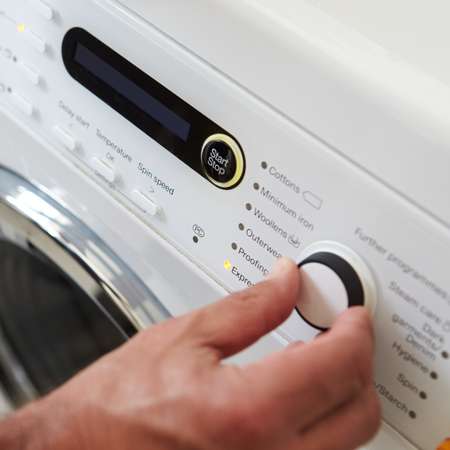
Large Household Appliances
Refrigerators
Freezers
Washing machines
Dryers
Washer-dryer combinations
Stoves and ovens
Extractor hoods
Steam ovens
Grills
Dishwashers
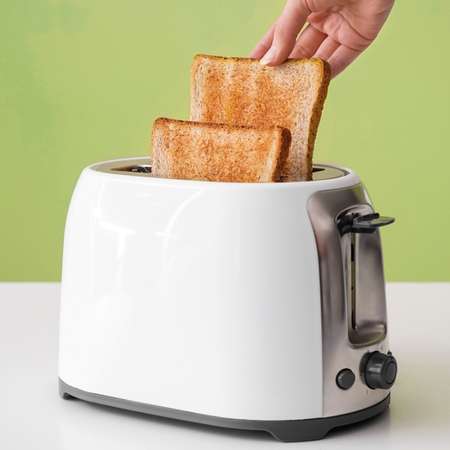
Small Household Appliances
Microwaves
Deep fryers and air fryers
Toasters, sandwich makers and waffle irons
Blenders, mixers and slicers
Coffee makers, automatic coffee machines, coffee capsule compatibility
Irons
Steam cleaners
Vacuums
Hair dryers and styling devices
Electric toothbrushes
QIMA’s testing services
QIMA’s testing services include physical, mechanical and chemical tests to check the safety, quality and performance of your home appliance products.
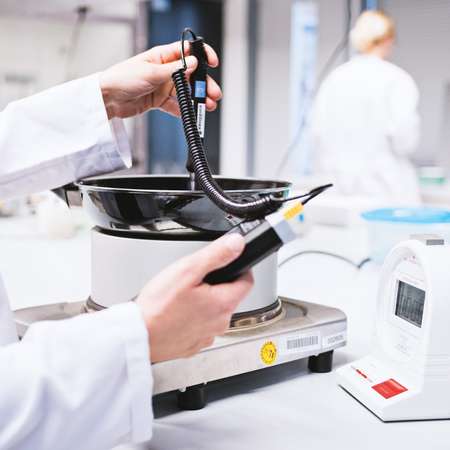
Depending on the product, these services can include:
Combustion testing
Durability tests
Earth continuity
Electrical safety
Electromagnetic fields
Energy labeling testing
Eco design
Flammability testing
Hipot test
Hygiene and microbiological testing
Internal construction review
IoT (e.g., wi-fi, Bluetooth,
Motor rotation speed measurement
Noise level measurement
Power consumption
Power cord pull test
Product function/performance test
Product parameter check
Sensory analysis
Stability test
Waterproof test
Working current/voltage check
Other tests according to customer programs or predetermined rules
From Testing to Certification. Prove Compliance to Retailers and Regulators
Testing verifies your home appliance meets the required standards. Certification gives you a mark or document to prove it to retailers, buyers, and consumers. QIMA offers three certification pathways for home appliance products:
GS Mark: The most recognised voluntary safety mark for the German and European market. Major retailers prefer or require GS Mark for electrical appliances and household equipment. Learn more about GS Mark →
IECEE CB Scheme: The international CB scheme enables recognition of your test results across multiple national certification bodies, reducing re-testing and cost when entering the EU, Asia, and the Americas simultaneously. Learn more about IECEE CB Scheme →
In-house / Fit-for-Use Test Marks: QIMA's own test marks provide a visible quality and safety claim for brands that want to differentiate on shelf. Learn more about Test Marks →
Trusted by 30,000 Brands to Get Testing Right
30,000
Clients worldwide
100+
Countries covered
6,000+
Field and lab experts
72
Net Promoter Score
QIMA's ISO/IEC 17025-accredited laboratories cover EU directives, US standards, and connected device compliance for home appliances delivering test reports accepted by certification bodies, retailers, and regulatory authorities globally.
Frequently Asked Questions
1. How much does home appliance testing cost?
Pricing depends on appliance type, applicable standards, and the number of target markets. QIMA provides fixed-fee quotes with no hidden costs. You can request a quote online and typically receive pricing within 24 hours.
2. How long does home appliance testing take?
Turnaround depends on product category, required tests, and applicable standards. QIMA confirms timelines during test plan approval before samples are shipped, and flags any longer-lead-time tests so production planning can be adjusted accordingly.
3. Which standards apply to my home appliance?
It depends on appliance type and destination market. For example, a washing machine sold in the EU requires LVD, EMC, and Ecodesign compliance, while the same product in the US requires UL/IEC safety testing and FCC approval if wireless functionality is included. QIMA regulatory experts define the full compliance scope before testing begins.
4. What happens if my appliance fails testing?
A detailed failure report identifies the unmet requirement and cause of failure. Once corrections are implemented, retesting can be performed.
5. Can QIMA test for both US and EU markets in one programme?
Yes. QIMA designs multi-market programs that combine EU directive requirements and US standards into a single testing workflow, reducing duplication and improving turnaround efficiency.
6. My appliance has Wi-Fi or Bluetooth. What additional testing does it need?
Connected appliances require additional compliance beyond electrical safety. In the EU, this includes the Radio Equipment Directive (RED). In the US, FCC approval is required for wireless functions. Emerging cybersecurity requirements, such as the EU Cyber Resilience Act, may also apply. QIMA integrates these into a unified testing program.
7. What’s the difference between testing and certification for home appliances?
Testing verifies compliance with applicable standards. Certification (such as GS Mark or IECEE CB Scheme certificates) provides formal recognition for retailers, buyers, and regulators. QIMA provides both testing and end-to-end certification management where required.
8. Does QIMA handle energy labeling and Ecodesign compliance?
Yes. EU Ecodesign and energy labeling requirements are mandatory for major appliance categories and are frequently updated. QIMA ensures compliance with current EU regulations and supports ENERGY STAR requirements for the US market where applicable.
Need more information?
By contacting QIMA you agree to our privacy policy and terms and conditions.