January 2026

North America News
The U.S. Consumer Product Safety Commission issued a final rule establishing revised labeling requirements and additional performance requirements specifically for neck floats to address hazards that can be associated with these products. The Commission is also amending the CPSC's list of Notice of Requirements to include neck floats. This rule will become effective on 15 June 2026.
On 15 December 2025, the Consumer Product Safety Commission (CPSC) published a final rule for neck floats to prevent injuries and infant deaths/drownings. The rule creates 16 CFR 1250.5 within 16 CFR 1250, the toy regulation which mandates ASTM F963 as the toy safety standard. This is necessary as the ASTM F963 standard does not include any specific performance requirements for aquatic toys or neck floats nor does it contain warning requirements that are adequate for neck floats that address the hidden hazards specifically associated with these products. These hazards include the risk of neck opening expansion during use, the risk of drowning in very shallow water, and the risk of death associated with partial or full slip-through.
The final rule will become effective on 15 June 2026 and will apply to neck floats manufactured after that date.
In summary, the standard applies to neck floats intended for children four years of age and younger, designed for use in sinks, bathtubs, paddling pools, and swimming pools. Key performance requirements include:
1. Conditioning before testing:
Exposure to heat, chlorinated saltwater, and UV light
Inflatable neck floats must be deflated during conditioning
2. Minimum buoyancy: Neck floats must provide at least 30% of their expected weight capacity. Inherently buoyant parts may lose no more than 5% of their initial buoyancy after submersion. Testing follows ANSI/CAN/UL 12402-9 Standard for Personal Flotation Devices - Part 9: Test Methods, with modifications, including inflation to 0.1 ± 0.01 PSIG, when relevant.
3. Restraint systems: Fasteners must either require a double-action release (two distinct actions at the same time) or a single action release requiring at least 50 N of force. Restraint systems must meet ASTM F833-21 Standard Consumer Safety Performance Specification for Carriages and Strollers, Section 6.4.4 when tested under Section 7.5.1 to ensure they do not release unintentionally.
4. Neck opening: The opening must not allow a specified head probe to pass through during a dynamic swing test.
In addition to the labeling requirements in ASTM F963, the rule requires enhanced warnings formatted according to ANSI/NEMA Z535.4-2023 Guide to Product Safety Signs & Labeling. Labels must warn that children have died while using neck floats, that the neck opening can stretch even if it seems snug, that drowning can occur in as little as one inch of water, and that inflatable neck floats with leaks must not be used. Labels must also state the intended age and weight.
In addition to what is outlined above, the Commission is amending the CPSC's list of Notice of Requirements (NORs) to add neck floats.
On 24 November 2025, the U.S. Consumer Product Safety Commission acting chairman accepted ASTM F2194:2025 as the new mandatory standard of reference for 16 CFR 1218 Safety Standard for Bassinets and Cradles.
Federal Register: Safety Standard for Bassinets and Cradles
The U.S. Consumer Product Safety Commission (CPSC), consistent with the CPSIA update process, issued a direct final rule updating the mandatory standard for bassinets and cradles. This rule, accepted on 24 November 2025, incorporates by reference the ASTM F2194:2025 version of the voluntary standard. The rule will become effective on 21 February 2026 and will apply to bassinets and cradles manufactured on or after the effective date.
ASTM F2194-25 includes some new definitions such as:
“bassinet/cradle accessory” definition that clarifies that such an accessory includes “a bassinet/cradle that may have hand-holds, handle(s), or grip openings and is intended to carry an occupant whose torso is completely supported by the product
“aftermarket mattress,” which means “a mattress sold or distributed separately for a bassinet or cradle, which is intended to replace the original equipment manufacturer (OEM) mattress”
Other definitions
ASTM F2194-25 also adds three new performance requirements under the header in section 6.12 Bassinet Structural Elements that are not in part 1218. Bassinets must meet the structural elements requirement by complying with one of two options.
The first option is for bassinets to meet side wall integrity and occupant support requirements, as follows:
6.12.1.1 Side wall integrity —no side wall shall be less than 7.5 inches when loaded with a 23 pound vertical load and a 5 pound horizontal load; and
6.12.1.2 Occupant support —top surface of bassinet/cradle mattress or sleep surface support shall not deflect more than 1.5 inches when the infant hinged weight gauge is placed in the product
The second option is for bassinets to meet section 6.12.2 Minimum Bassinet/Cradle Height:
The lowest uncompressed bassinet/cradle top rail shall be at minimum 16 inches from the external floor supporting the unit.
In addition, ASTM F2194-25 requires that the head-to-toe sleep surface angle (section 6.13) not exceed 10 degrees; expands the requirement that the lateral sleep surface angle (section 6.14) be less than or equal to 7 degrees from rocking products to all bassinets/cradles; adds electrically or battery powered requirements (section 6.15) identical to requirements in other juvenile products; and adds performance requirements to ensure aftermarket bassinet mattresses (section 6.16) perform similarly to OEM mattresses.
The warning and instructions for ASTM F2194-25 are updated to reflect ASTM Ad Hoc Language.
The Connecticut Department of Energy and Environmental Protection issued an Order pursuant to General Statutes § 22a-6, approving specific labeling language for consumer products containing intentionally added perfluoroalkyl or polyfluoroalkyl substances (PFAS). This Order establishes approved labeling text ahead of the 1 July 2026 prohibition on manufacturing, selling, offering for sale, or distributing unlabeled PFAS-containing products in Connecticut.
PFAS (perfluoroalkyl and polyfluoroalkyl substances) are synthetic chemicals used in consumer products for water, grease, and stain resistance. These substances persist in the environment, bioaccumulate in living organisms, and pose documented risks to human health and ecosystems.
The State of Connecticut Department of Energy and Environmental Protection (DEEP) issued an Order pursuant to General Statutes § 22a-6 on 1 December 2025, approving specific labeling language for consumer products containing intentionally added perfluoroalkyl or polyfluoroalkyl substances (PFAS).
This Order establishes approved labeling text ahead of the 1 July 2026 prohibition on manufacturing, selling, offering for sale, or distributing unlabeled PFAS-containing products in Connecticut, as noted under Connecticut General Statutes § 22a-903c. This Order provides regulatory clarity to manufacturers, producers, and distributors by balancing consumer notification goals with industry implementation needs, aiming to minimize supply chain disruptions while ensuring clear disclosure of PFAS presence in consumer products.
1. Scope
The regulation applies to products containing intentionally added PFAS in the following 12 categories:
Apparel,
Carpet and rug,
Cleaning product,
Cookware,
Cosmetic product,
Dental floss,
Fabric treatment,
Juvenile product,
Menstruation product,
Textile furnishing,
Ski wax,
Upholstered furniture
2. DEEP Approved Labeling Language
The label must meet the labeling criteria outlined in Connecticut General Statutes section22a-903c. Products must use one of the following approved phrases:
“Contains PFAS”
“Made with PFAS”
“Made with PFAS chemicals”
“Made with intentionally added PFAS”
“The product contains PFAS chemicals”
Other language proposed by the producer/manufacturer may be approved by DEEP by email to DEEP.PFASInProduct@ct.gov .
Submission requirement:
Include the proposed words or symbols
The petitioner’s name, title, email address, and telephone number
Implementation and Resources
DEEP will maintain an updated list of all approved labeling language on its "PFAS in Products" webpage: https://portal.ct.gov/deep/p2/pfas-in-products
In the US, when hazards are identified in consumer products, they will be recalled and published in the Consumer Product Safety Commission (CPSC) Recent Recalls on the CPSC website, which is updated daily. The US recalls from 01 December 2025 to 31 December 2025 are summarized below:
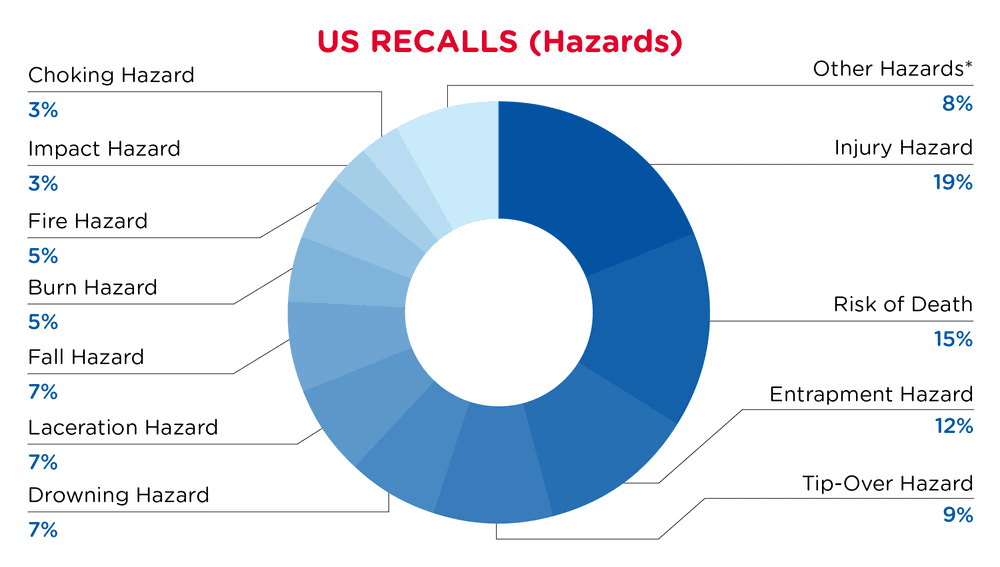
| Hazards | Frequency |
| Injury Hazard | 11 |
| Risk of Death | 9 |
| Entrapment Hazard | 7 |
| Tip-Over Hazard | 5 |
| Drowning Hazard | 4 |
| Laceration Hazard | 4 |
| Fall Hazard | 4 |
| Burn Hazard | 3 |
| Fire Hazard | 3 |
| Impact Hazard | 2 |
| Choking Hazard | 2 |
| Other Hazards* | 5 |
*Other Hazards include Swallowing Risk, Crushing Hazard, Crash Hazard, Ingestion Hazard and Suffocation Hazard with a frequency of less than 2.
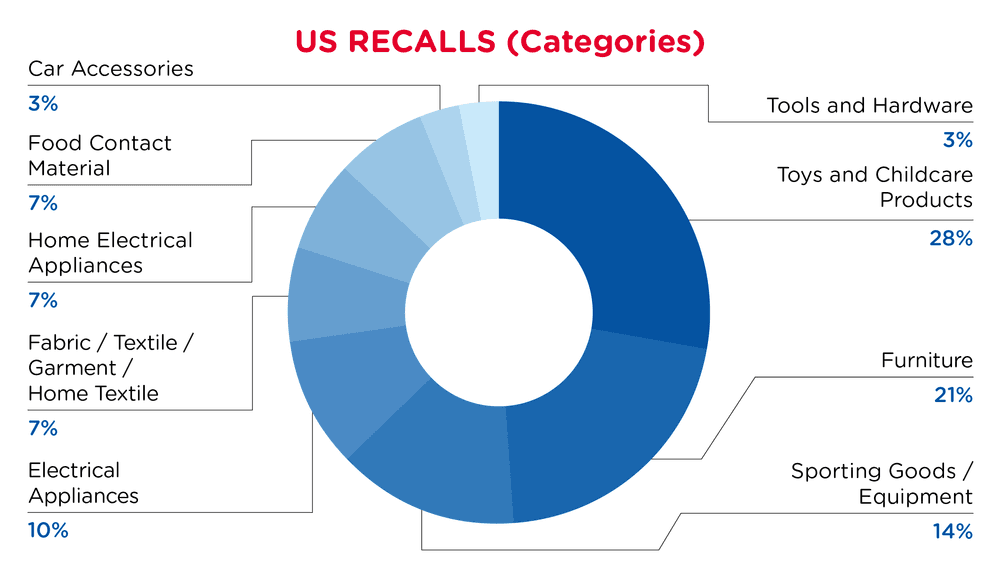
| Product Categories | Frequency |
| Toys and Childcare Products | 8 |
| Furniture | 6 |
| Sporting Goods / Equipment | 4 |
| Electrical Appliances | 3 |
| Fabric / Textile / Garment / Home Textile | 2 |
| Home Electrical Appliances | 2 |
| Food Contact Material | 2 |
| Car Accessories | 1 |
| Tools and Hardware | 1 |
For a complete list, click here
In Canada, when hazards are identified in consumer products, they will be recalled and published in the Recalls and Safety Alerts Database on the Health Canada website, which is updated daily. The Canada recalls from 01 December 2025 to 31 December 2025 are summarized below:
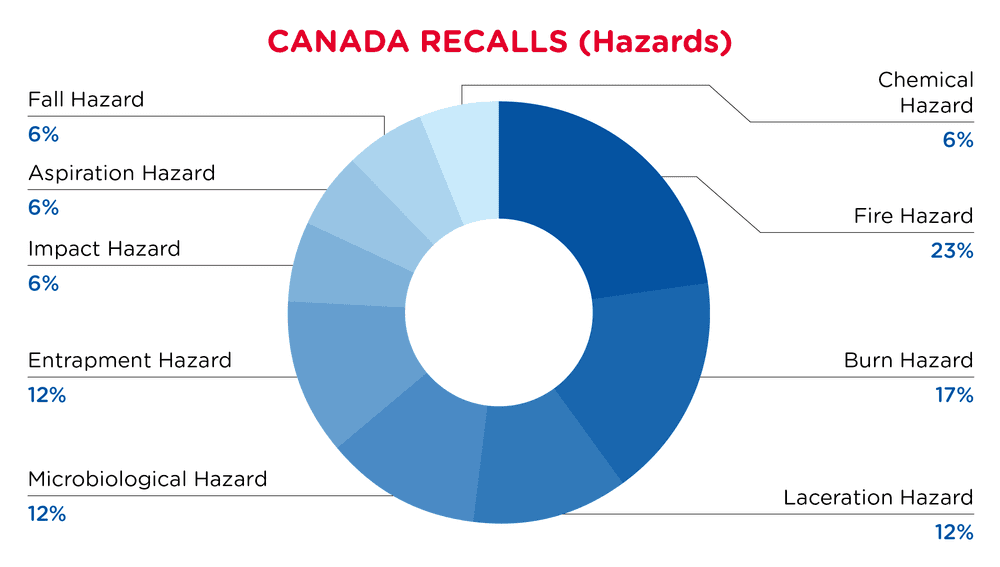
| Hazards | Frequency |
| Fire Hazard | 4 |
| Burn Hazard | 3 |
| Laceration Hazard | 2 |
| Microbiological Hazard | 2 |
| Entrapment Hazard | 2 |
| Impact Hazard | 1 |
| Aspiration Hazard | 1 |
| Fall Hazard | 1 |
| Chemical Hazard | 1 |
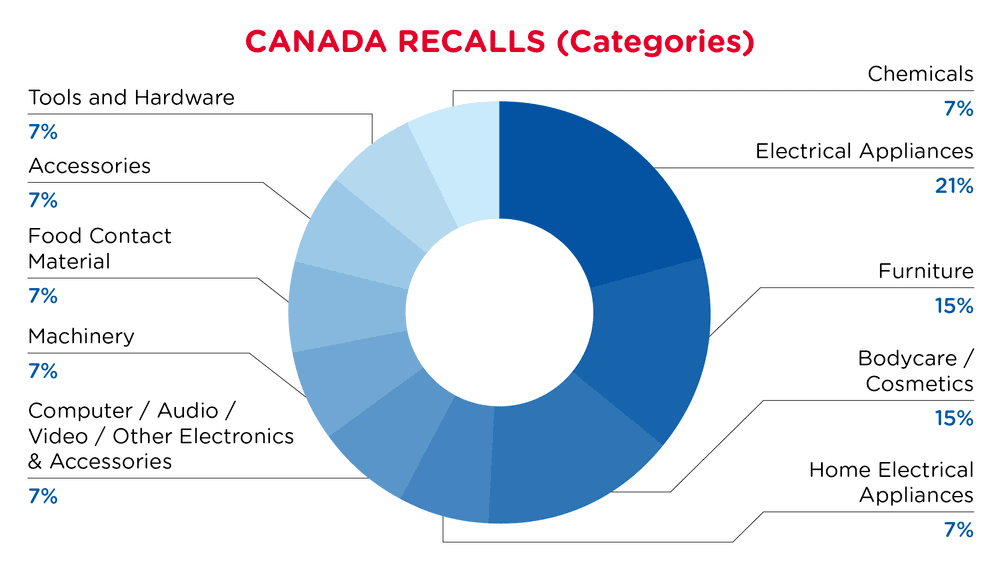
| Product Categories | Frequency |
| Electrical Appliances | 3 |
| Furniture | 2 |
| Bodycare / Cosmetics | 2 |
| Home Electrical Appliances | 1 |
| Computer / Audio / Video / Other Electronics & Accessories | 1 |
| Machinery | 1 |
| Food Contact Material | 1 |
| Accessories | 1 |
| Tools and Hardware | 1 |
| Chemicals | 1 |
For a complete list, click here
Europe News
The European Union adopted Commission Regulation (EU) 2026/78 on 12 January 2026. This regulation amends Cosmetics Regulation (EC) No 1223/2009 to implement prohibitions and restrictions for substances newly classified as carcinogenic, mutagenic, or toxic for reproduction. Key updates include new restrictions for Silver, Hexyl Salicylate, and updates to o-Phenylphenol. The enforcement date is 2 February 2026.
The European Commission officially adopted Commission Regulation (EU) 2026/78 on 12 January 2026. This regulation reflects the classification of substances as carcinogenic, mutagenic, or toxic for reproduction (CMR) categories 1A, 1B, or 2 under Delegated Regulation (EU) 2024/2564. The regulation introduces significant revisions to Annexes II, III, IV, and V of Cosmetics Regulation (EC) No 1223/2009.
1. Annex II (Prohibited Substances)
a. Consolidated and deleted.
Entry: 1397 (consolidated to cover perboric acid and all salts)
| Chemical Name | CAS Number |
|---|---|
| Perboric acid (H3BO2(O2)), monosodium salt trihydrate | 13517-20-9 |
| Perboric acid, sodium salt, tetrahydrate | 37244-98-7 |
| Perboric acid (HBO(O2)), sodium salt, tetrahydrate | 10486-00-7 |
| Sodium peroxoborate, hexahydrate | — |
| Sodium perborate | 15120-21-5 |
| Sodium peroxometaborate; sodium peroxoborate | 7632-04-4 / 10332-33-9 / 10486-00-7 |
| Perboric acid, sodium salt | 11138-47-9 |
| Perboric acid, sodium salt, monohydrate | 12040-72-1 |
| Perboric acid (HBO(O2)), sodium salt, monohydrate | 10332-33-9 |
| Trimethyl borate | 121-43-7 |
Entries 1398 and 1399 are deleted.
b. Replaced.
| Entry | Chemical Name | CAS Number |
|---|---|---|
| 1727 | Silver (nano) [1 nm < particle diameter ≤ 100 nm] Silver (massive) [particle diameter ≥ 1 mm] | 7440-22-4 |
c. Newly added (15 substances).
| Entry | Chemical Name | CAS Number |
|---|---|---|
| 1752 | Multi-walled Carbon Tubes (synthetic graphite in tubular shape) with a geometric tube diameter range ≥ 30 nm to < 3 μm and a length ≥ 5 μm and aspect ratio > 3:1, including Multi-Walled Carbon Nanotubes, MWC(N)T | — |
| 1753 | reaction mass of 1,3-dioxan-5-ol and 1,3-dioxolan- 4-ylmethanol | — |
| 1754 | Acetone oxime | 127-06-0 |
| 1755 | 2-(dimethylamino)-2-[(4-methylphenyl)methyl]- 1-[4-(morpholin-4-yl)phenyl]butan-1-one | 119344-86-4 |
| 1756 | 2,3-epoxypropyl neodecanoate | 26761-45-5 |
| 1757 | Benthiavalicarb-isopropyl (ISO); isopropyl [(S)- 1-{[(R)-1-(6-fluoro-1,3-benzothiazol-2-yl)ethyl] carbamoyl}-2-methylpropyl]carbamate | 177406-68-7 |
| 1758 | 7-oxabicyclo[4.1.0]hept-3-ylmethyl 7-oxabicyclo[4.1.0]heptane-3-carboxylate | 2386-87-0 |
| 1759 | Sodium 3-(allyloxy)-2-hydroxypropanesulphonate | 52556-42-0 |
| 1760 | 1,4-dichloro-2-nitrobenzene | 89-61-2 |
| 1761 | Fenpropidin (ISO); (R,S)-1-[3-(4-tert-butylphenyl)- 2-methylpropyl]piperidine | 67306-00-7 |
| 1762 | N,N’-methylenediacrylamide | 110-26-9 |
| 1763 | tert-butyl 2-ethylperoxyhexanoate | 3006-82-4 |
| 1764 | Trimethyl borate | 121-43-7 |
| 1765 | S-metolachlor (ISO); 2-chloro-N-(2-ethyl- 6-methylphenyl)-N-[(2S)-1-methoxypropan-2-yl] acetamide; (RaSa)-2-chloro-N-(6-ethyl-o- tolyl)-N-[(1S)-2-methoxy-1-methylethyl]acetamide [contains 80-100 % 2-chloro-N-(2-ethyl- 6-methylphenyl)-N-[(2S)-1-methoxypropan-2-yl] acetamide and 0-20 % 2-chloro-N-(2-ethyl- 6-methylphenyl)-N-[(2R)-1-methoxypropan-2-yl] acetamide] | 87392-12-9 |
| 1766 | Pyraclostrobin (ISO); methyl N-(2-{[1-(4-chlorophenyl)-1H-pyrazol-3-yl] oxymethyl}phenyl) N-methoxy carbamate | 175013-18-0 |
2. Annex III (Restricted Substances)
Newly added.
| Entry | Chemical Name | CAS Number | Maximum Concentrations |
| 379 | Silver (powder) [100 nm < particle diameter < 1 mm] | 7440-22-4 | Toothpaste: 0.05% Mouthwash: 0.05% |
| 380 | Hexyl 2-hydroxybenzoate | 6259-76-3 | Hydroalcoholic fragrances (adults): 2% Rinse-off products (adults): 0.5% Leave-on products (adults): 0.3% Toothpaste/mouthwash: 0.001% Specific children's products (< 3 years) - Shower gel/bath products, hand wash, shampoo, hair conditioner, body, face and hand (skin) care products, lipstick/lip balm and fragrance products : 0.1% |
3. Annex IV (Allowed Colorants)
Replaced.
| Entry | Chemical Name | CAS Number | Maximum Concentrations |
|---|---|---|---|
| 142 | Silver (powder) [100 nm < particle diameter < 1 mm] | 7440-22-4 | Lip products: 0.2% Eye shadow: 0.2% |
4. Annex V (Allowed Preservatives)
Replaced.
| Entry | Chemical Name | CAS Number | Maximum Concentrations |
|---|---|---|---|
| 7 | o-Phenylphenol Sodium o-Phenylphenate | 90-43-7 132-27-4 | Rinse-off products: 0.2% Leave-on products: 0.15% Combined use must not exceed these limits Restrictions: Not for inhalation applications, oral products, or eye contact Warning required: "Avoid contact with eyes" |
5. Scientific Basis for Updates
Scientific Committee on Consumer Safety (SCCS) safety assessments utilized:
- SCCS/1665/24: Silver (final: 20 June 2024)
- SCCS/1668/24: Hexyl Salicylate (final: 25 October 2024; corrigendum: 18 December 2024)
- SCCS/1669/24: o-Phenylphenol and Sodium o-Phenylphenate (final: 25 October 2024)
6. Entry into Force and Application
- Enters into force: 2 February 2026 (20 days after publication)
- Application date: 1 May 2026
The EU Commission draft regulation for Unified Battery Labeling sets standardized formats, content, sizes, priority order, and accessibility requirements for battery labels and provides detailed requirements for how related electronic devices and automotive products should properly label the batteries they use.
Pending its official release, the regulation will take effect 20 days after publication in the Official Journal and will be directly applicable to all member states.
On 15 December 2025, the EU Commission published a regulation proposal for the unified specifications of battery labels, titled "COMMISSION IMPLEMENTING REGULATION (EU) …/... of XXX laying down rules for the application of Regulation (EU) 2023/1542", addressing labeling requirements for all battery regulations. This applies to electric vehicle batteries, rechargeable industrial batteries (over 2 kWh), light transport vehicle batteries, portable batteries, and battery packs. It allows the use of Quick Response (QR) codes and digital solutions in limited spaces or multilingual environments, emphasizing compatibility with battery passports.
The intent is to help businesses ensure a common look and feel to meet the various labeling requirements applicable to batteries that are placed on the single market.
Key points of the regulatory proposal include:
Purpose: To achieve unified and comparable battery labeling information across the EU/EEA, covering carbon footprint, general/specific information, hazardous substances, and digital displays.
Scope
Applies to electric vehicle batteries, rechargeable industrial batteries (over 2 kWh), light transport vehicle (LMT) batteries, portable batteries, and battery packs.
If a product falls into multiple categories, the most stringent labeling requirements must be applied.
Main Requirements (per draft clauses):
Core Information (Article 1): Labels must include information specified in Annexes I–III; information can be spread across multiple physical labels; if it's not possible to display everything physically, it can be provided on packaging/documents and supplemented with QR codes; button batteries and embedded batteries can use packaging or QR codes; if a QR code is on the product/vehicle, it must be accompanied by a battery icon.
Design and Size (Article 2): The minimum area for labels must be at least 5% of the maximum printable/engraved surface; icons must be a maximum of 2.5 cm × 2.5 cm; font size must be a maximum of 25 pt, preferably using Noto Sans or a similar open-source font; labels must have high contrast, be durable, and remain visible during use; labels on battery packs can have QR codes on modules.
Non-rechargeable Batteries (Article 3): Must use the IEC standard "No Charging" symbol, with a minimum size of 5 mm × 5 mm; if space is limited, the information can be shown on packaging/documents and supplemented with QR codes.
Hazardous Substances (Article 4): Batteries containing restricted chemicals, but below threshold levels, must label the chemical names; hazardous substances must be labeled according to
Classification, Labelling and Packaging of chemicals (
CLP) regulations.
Priority Order for Limited Space (Article 5): QR code → separate recycling symbol → heavy metals symbol → non-rechargeable symbol → physical general information label.
Language and Accessibility (Article 6): Language used is determined by member states; in multilingual situations, physical labels may use one language, with additional languages provided via QR codes (unless national laws specify otherwise); adherence to accessibility directives (2019/882) is required.
Carbon Footprint Label (Article 7): Must use the unified format specified in Annex V, which is mandatory for categories described in Article 7(2) of Regulation 2023/1542.
Flexibility and Implementation Notes:
Manufacturing dates can be stamped in other locations to reduce frequent changes' costs, but physical labels must indicate where the information can be found.
The use of QR codes is widely allowed to address space, safety, or multilingual needs and emphasizes compatibility with battery passports and digital data.
Effective Date:
The regulation will take effect 20 days after its publication in the Official Journal and is directly applicable to all member states.
However, the exact effective date is not yet confirmed, pending the official release of this regulation proposal.
Reference Link:
In Europe, when hazards are identified in non-food consumer products, the products will be recalled and published in the Safety Gate system, which is updated weekly. The European recalls from 01 December 2025 to 31 December 2025 are summarized below:
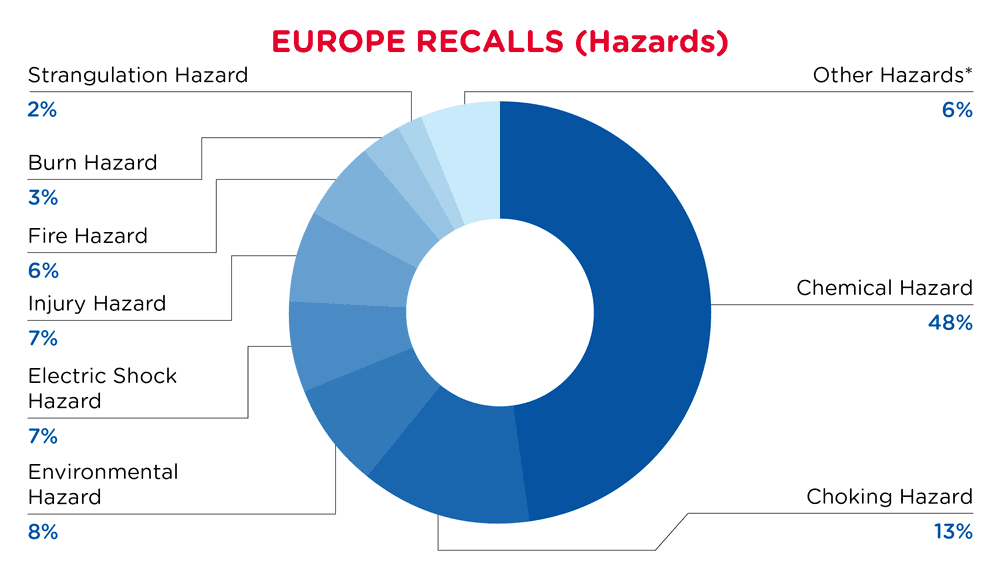
| Hazards | Frequency |
| Chemical Hazard | 169 |
| Choking Hazard | 44 |
| Environmental Hazard | 29 |
| Electric Shock Hazard | 25 |
| Injury Hazard | 23 |
| Fire Hazard | 20 |
| Burn Hazard | 11 |
| Strangulation Hazard | 7 |
| Other Hazards* | 21 |
*Other Hazards include Drowning Hazard, Suffocation Hazard, Damage to Sight, Health Risk Hazard, Microbiological Hazard, Cut Hazard and Entrapment Hazard with a frequency of less than 10.
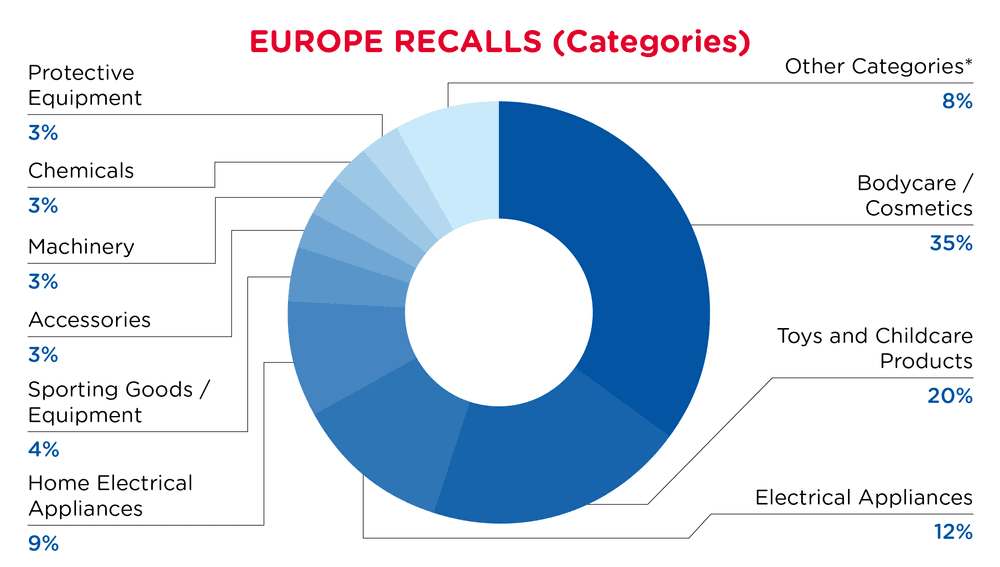
| Product Categories | Frequency |
| Bodycare / Cosmetics | 107 |
| Toys and Childcare Products | 61 |
| Electrical Appliances | 36 |
| Home Electrical Appliances | 27 |
| Sporting Goods / Equipment | 13 |
| Accessories | 11 |
| Machinery | 9 |
| Chemicals | 8 |
| Protective Equipment | 8 |
| Other Categories* | 24 |
*Other Categories include Fabric / Textile / Garment / Home Textile, Jewelry, Footwear, Car Accessories, Computer / Audio / Video / Other Electronics & Accessories and Tools and Hardware with a frequency of less than 8.
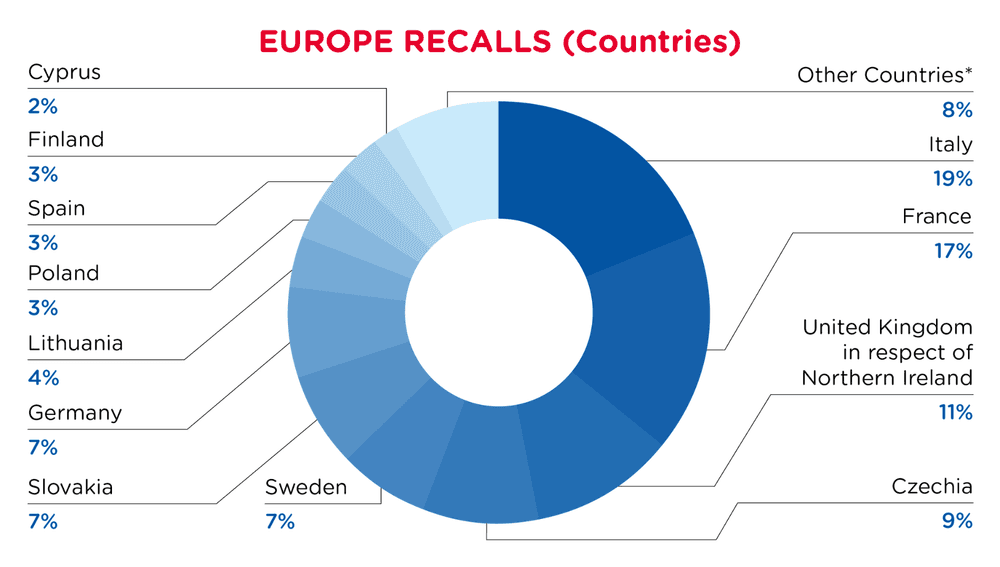
| Notifying Country | Frequency |
| Italy | 59 |
| France | 52 |
| United Kingdom in respect of Northern Ireland | 32 |
| Czechia | 28 |
| Sweden | 22 |
| Slovakia | 21 |
| Germany | 21 |
| Lithuania | 11 |
| Poland | 10 |
| Spain | 9 |
| Finland | 9 |
| Cyprus | 7 |
| Other Countries * | 23 |
*Other Countries include Hungary, Croatia, Ireland, Slovenia, Austria, Estonia, Iceland, Belgium and Malta with a frequency of less than 7.
For a complete list, click here
China News
The China National Standard GB 18383 has undergone its second major revision since its initial release in 2001 and its first update in 2007.
The updated standard specifies definitions, technical requirements, inspection methods, marking, sampling, and determination rules for textile products with filling materials (including bedding, quilts, cushions, etc.). It applies to products for general consumer use and differentiates household filling products from non-household ones.
The effective date of GB 18383-2025 is 1 July 2026.
The China National Standard GB 18383 has undergone its second major revision since its initial release in 2001 and its first update in 2007. The newly issued GB 18383‑2025 defines updated terminology, raw material specifications, hygienic indicators, sampling rules, and inspection methods for textile products containing filling materials, with particular emphasis on household and infant-use items.
This revision introduces several new definitions, expands microbiological safety requirements, adds limits for residual chlorine, mandates labeling of recycled material use, and replaces or removes outdated testing and packaging provisions. Manufacturers, importers, testing laboratories, and retailers must adapt their quality control processes, test protocols, and labeling practices to comply with the updated standard before the effective date.
Highlights of Changes / Comparison Table:
| Section / Clause | Title | Highlights of Changes |
|---|---|---|
| Foreword | General | Structural and editorial adjustments to improve clarity; several clauses renumbered. |
| 3 | Terms and Definitions | Added new terms (e.g., clauses 3.4, 3.9–3.12), updated several definitions from 2007 version. |
| 4.2 | Raw Material Requirements | Revised permitted raw materials and limitations for household filling products; introduced requirements for infant products’ filling/padding materials. |
| 4.3.2 / 5.2.2 | Short Fiber Content | Updated requirement limits and test methods. |
| 4.3.3 / 5.2.3 | Impurity Content | Altered impurity thresholds and methods. |
| 4.3.4 | Fiber Content | Revised requirements for filling fiber composition. |
| 4.3.5 / 5.2.5 | Free Residual Chlorine | New requirement and test method added. |
| 4.3.6 | Microbiological Requirements | Name of Pseudomonas aeruginosa updated; added limits and test methods for bacterial colony count, fungal colony count, Escherichia coli; revised assessments for feather/down products; eliminated skin/mucous irritation tests. |
| 5.1 | Sensory Inspection | Added detailed procedures for sensory evaluation. |
| 5.2.1.2 | Sample Preparation | New sampling method for hygienic indicators. |
| 5.2.6.2 | Odor Test | Revised odor testing method. |
| 6.1 | Marking | Introduced mandatory declaration for use of recycled materials. |
| 7.1.1.2 / B.1.2 | Sampling | Revised sampling quantities for bundled filling fibers; added hygienic indicator sampling requirements. |
| 7.2 | Determination Rules | Updated batch determination rules; added single-piece determination; deleted re‑inspection clause. |
| Deleted Sections | Removed marking requirements for household filling products, packaging/storage/transport provisions, and certain test methods (roller method). |
Rationale for Update:
The revision addresses advances in textile product safety, hygiene, and environmental considerations since 2007. It aligns testing methods with new technical capabilities, enhances microbiological safety controls (especially for infant-use products), and introduces transparency for recycled content use. Additionally, removal of outdated or redundant requirements streamlines compliance.
Scope Audience & Impact:
Manufacturers & Importers: Adjust sourcing and quality checks to meet stricter raw material and hygiene criteria; new recycled content marking obligations.
Testing Laboratories: Implement new methodologies for fiber assessment, impurity measurement, residual chlorine determination, and microbiological analysis.
Retailers & Distributors: Ensure supplied textile filling products comply with updated hygiene indicators and labeling requirements, especially infant-use items.
Effective Date: 1 July 2026; transition strategies should be completed before this deadline.
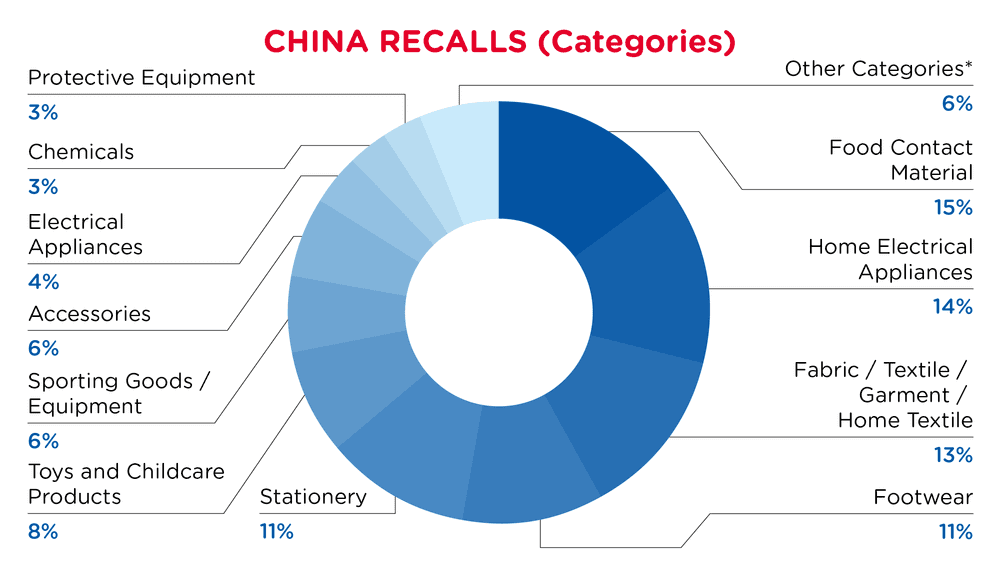
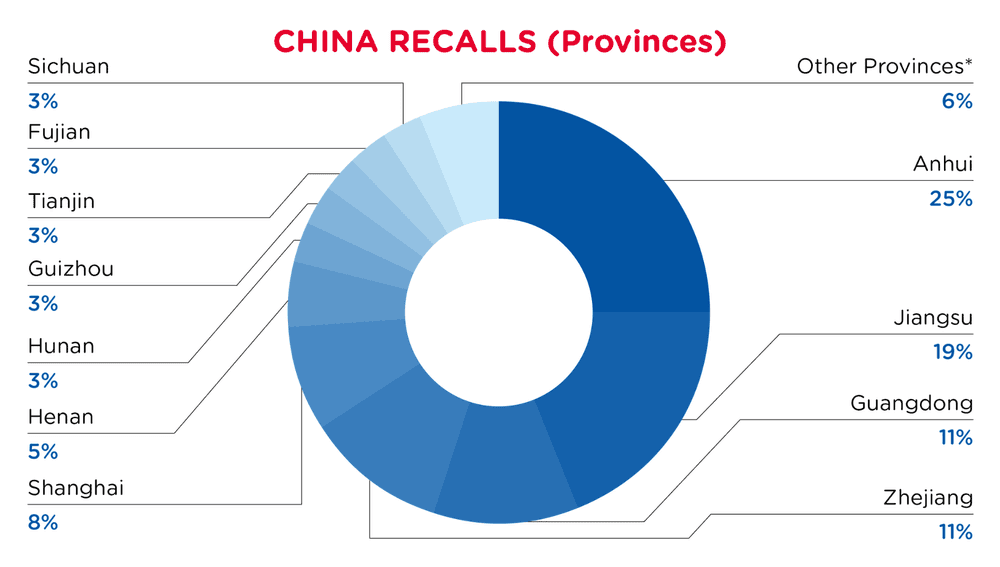
In China, when hazards are identified in consumer products, they will be recalled and published in the SAMR Defective Product Administrative Centre, which is updated daily. The China recalls from 01 December 2025 to 31 December 2025 are summarized below:
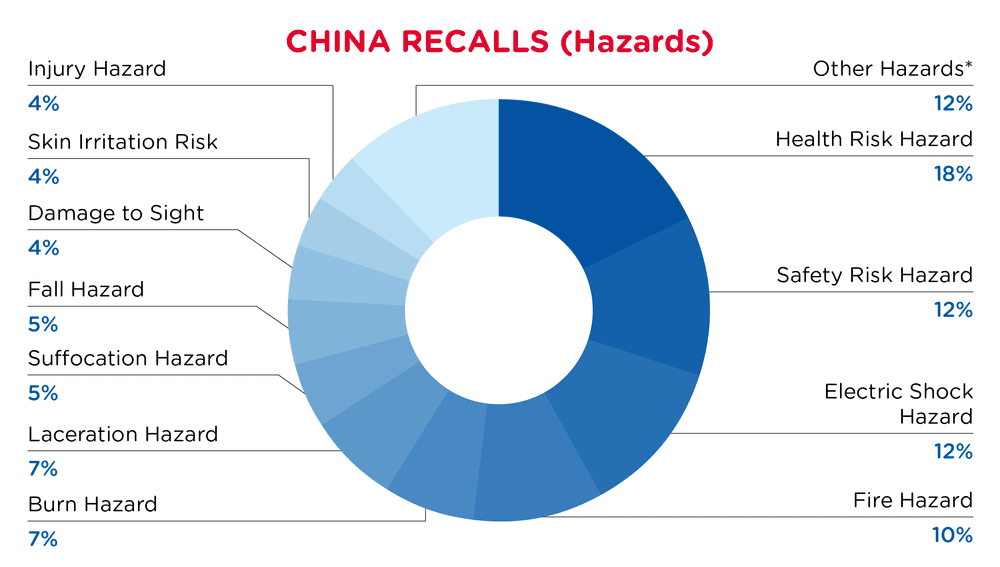
| Hazards | Frequency |
| Health Risk Hazard | 29 |
| Safety Risk Hazard | 19 |
| Electric Shock Hazard | 19 |
| Fire Hazard | 16 |
| Burn Hazard | 12 |
| Laceration Hazard | 11 |
| Suffocation Hazard | 9 |
| Fall Hazard | 8 |
| Damage to Sight | 7 |
| Skin Irritation Risk | 6 |
| Injury Hazard | 6 |
| Other Hazards* | 20 |
*Other Hazards include Swallowing Risk, Entanglement Hazard, Puncture Hazard, Impact Hazard, Damage to Skin, Carbon Monoxide Poisoning Hazard, Crash Hazard and Explosion Hazard with a frequency of less than 6.
| Product Categories | Frequency |
| Food Contact Material | 21 |
| Home Electrical Appliances | 20 |
| Fabric / Textile / Garment / Home Textile | 19 |
| Footwear | 15 |
| Stationery | 15 |
| Toys and Childcare Products | 12 |
| Sporting Goods / Equipment | 9 |
| Accessories | 9 |
| Electrical Appliances | 5 |
| Chemicals | 4 |
| Protective Equipment | 4 |
| Other Categories* | 8 |
*Other Categories include Bodycare / Cosmetics, Furniture, Car Accessories, Tools and Hardware and Travel Items with a frequency of less than 4.
| Provinces | Frequency |
| Anhui | 36 |
| Jiangsu | 28 |
| Guangdong | 15 |
| Zhejiang | 15 |
| Shanghai | 11 |
| Henan | 7 |
| Hunan | 5 |
| Guizhou | 4 |
| Tianjin | 4 |
| Fujian | 4 |
| Sichuan | 4 |
| Other Provinces* | 8 |
*Other Provinces include Beijing, Hubei, Xinjiang, Ningxia, Hainan and Guangzhou with a frequency of less than 4.
For a complete list, click here
Australia/New Zealand News
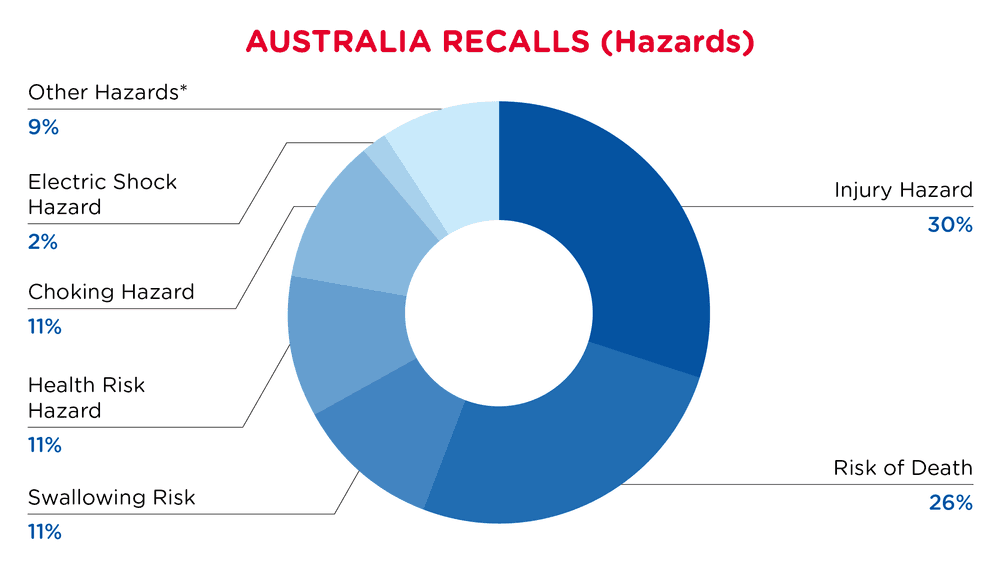
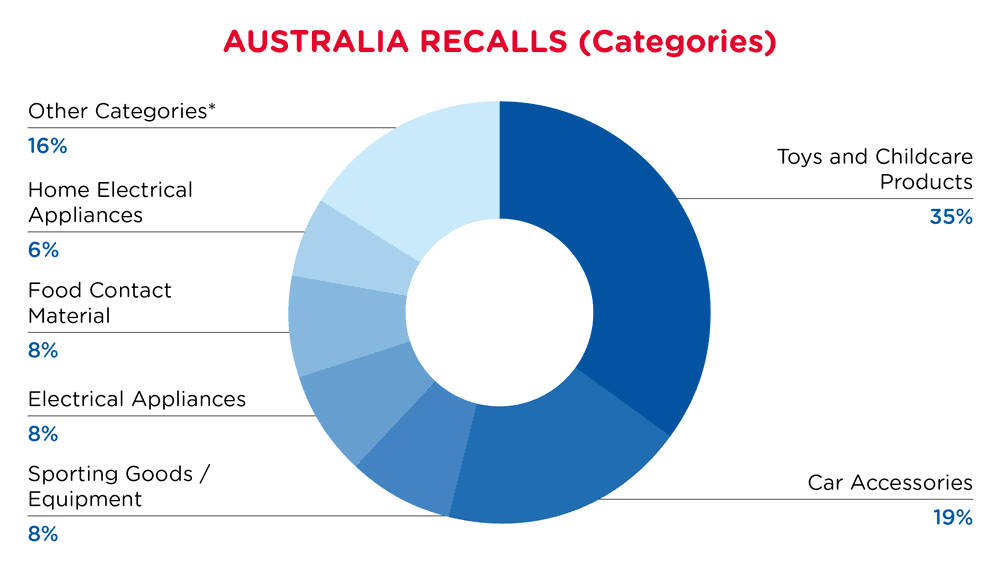
In Australia, when hazards are identified in consumer products, they will be recalled and published in the Recalls and Safety Alerts Database on the Australian Competition & Consumer Commission website, which is updated daily. The Australia recalls from 01 December 2025 to 31 December 2025 are summarized below:
| Hazards | Frequency |
| Injury Hazard | 25 |
| Risk of Death | 22 |
| Swallowing Risk | 9 |
| Health Risk Hazard | 9 |
| Choking Hazard | 9 |
| Electric Shock Hazard | 2 |
| Other Hazards* | 8 |
*Other Hazards include Drowning Hazard, Cut Hazard, Burn Hazard, Fall Hazard, Skin Irritation Risk, Laceration Hazard, Eye Irritation Risk and Entrapment Hazard with a frequency of less than 2.
| Product Categories | Frequency |
| Toys and Childcare Products | 13 |
| Car Accessories | 7 |
| Sporting Goods / Equipment | 3 |
| Electrical Appliances | 3 |
| Food Contact Material | 3 |
| Home Electrical Appliances | 2 |
| Other Categories* | 6 |
*Other Categories include Protective Equipment, Household Items, Furniture, Computer / Audio / Video / Other Electronics & Accessories, Chemicals and Accessories with a frequency of less than 2.
For a complete list, click here
Subscribe to our Regulatory Updates
Unsubscribe at any time. Read our privacy policy.