June 2026

North America News
On 9 June 2026, the U.S. Food and Drug Administration issued a final administrative order (OTC000039) adding bemotrizinol to the list of permitted active ingredients under the over-the-counter sunscreen monograph. This marks the first new sunscreen active ingredient added to this monograph since the late 1990s, and the first new ingredient added to any over-the-counter monograph under the streamlined process established by the CARES Act. Already in widespread use in Europe and many other countries, bemotrizinol is designated generally recognized as safe and effective (GRASE) for use in sunscreens by adults and children aged 6 months and older, at concentrations up to 6 percent.
Bemotrizinol (BEMT) is a chemical ultra violet (UV) filter that absorbs both UVA and UVB rays, and doesn't break down easily when exposed to sunlight, making it more effective at protecting against skin cancer and preventing wrinkles. BEMT has been used in Europe, Asia and Australia for over 20 years.
Sunscreen products in the United States are governed by the Food and Drug Administration’s (FDA's) over-the-counter (OTC) monograph framework, administered by the Center for Drug Evaluation and Research (CDER). Under this framework, sunscreen products may enter the market without a separate drug application, provided they comply with established monograph conditions — including approved active ingredients, permitted uses, and dosage limits. Prior to this action, no new sunscreen active ingredient had been added to the OTC sunscreen monograph since the late 1990s, leaving the U.S. market behind Europe and other global markets where newer sunscreen ingredients have long been available.
The FDA finalized its administrative order on 9 June 2026, following a structured regulatory review process.
1. Scope
The FDA final order designates BEMT as generally recognized as safe and effective (GRASE) for use in sunscreens.
GRASE Coverage: Applicable for adults and children 6 months of age and olderApproved Concentration: permitted at concentrations up to 6% in OTC sunscreen formulations.
2. Implementation and Resources
The final order will take effect from 9 August 2026.
Manufacturers may proceed to market sunscreen products containing BEMT without a new drug application, subject to full compliance with all applicable OTC monograph requirements. The FDA retains authority to further modify the OTC monograph through subsequent administrative orders.
California’s Department of Toxic Substances Control has finalized the listing of nail products with Triphenyl Phosphate (TPhP) over 250 ppm as Priority Products under its Safer Consumer Products Regulations. The rule will become effective on 1 October 2026.
Triphenyl phosphate (TPhP) is a non-halogenated aromatic phosphate ester used widely in the cosmetics and nail product industry. TPhP is added as a plasticizer to nail coatings and nail treatments to provide flexibility and durability.
California’s Department of Toxic Substances Control (DTSC) has determined that exposure to TPhP-containing nail products may contribute to or cause significant or widespread adverse impacts to Californians, including sensitive subpopulations such as nail salon workers, children, pregnant people, and their fetuses. The following is summarized from DTSC's final rule regarding nail products with TPhP.
Scope
The scope of the DTSC Priority Products listing includes nail products, specifically nail coatings, nail art, and nail and cuticle treatments, containing triphenyl phosphate (TPhP) over 250 ppm as an added ingredient or a contaminant manufactured on or before 1 October 2026 and sold in California.
How to Comply?
Manufacturers of nail products that contain TPhP greater than 250 ppm as an added ingredient or contaminant must submit a Priority Product Notification (PPN) to the DTSC by 30 November 2026. The PPN must name all of the manufacturer’s nail products sold in California containing TPhP at concentrations greater than 250 ppm.
After submitting the PPN, manufacturers must submit one of the following on or before 30 March 2027:
Chemical Removal Intent/Confirmation Notification;
Product Removal Intent/Confirmation Notification;
Product-Chemical Replacement Intent/Confirmation Notification; or
Preliminary Alternatives Analysis Report or these alternate reporting options.
These documents must be submitted through DTSC’s CalSAFER portal.
In the US, when hazards are identified in consumer products, they will be recalled and published in the Consumer Product Safety Commission (CPSC) Recent Recalls on the CPSC website, which is updated daily. The US recalls from 01 May 2026 to 31 May 2026 are summarized below:
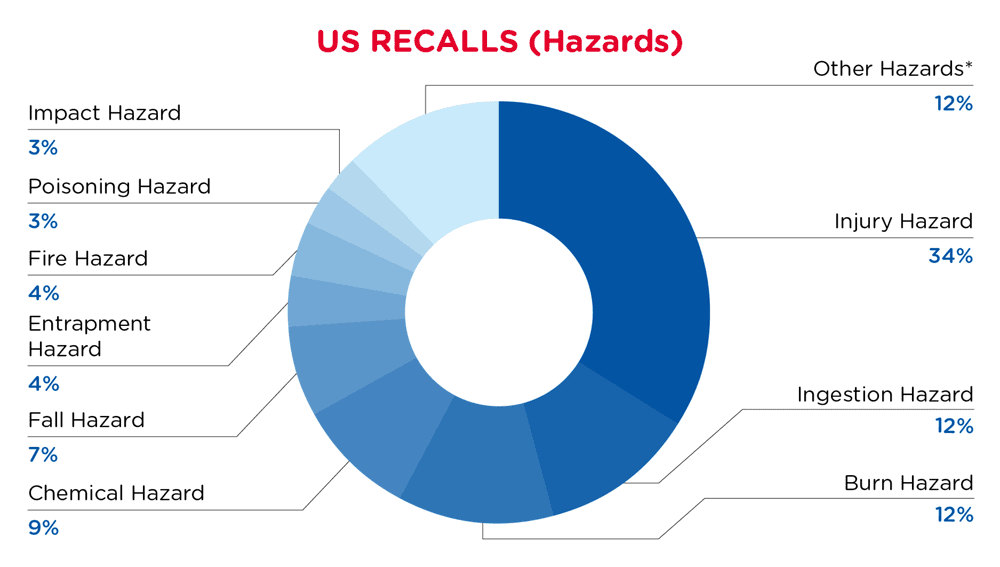
| Hazards | Frequency |
|---|---|
| Injury Hazard | 34 |
| Ingestion Hazard | 12 |
| Burn Hazard | 12 |
| Chemical Hazard | 9 |
| Fall Hazard | 7 |
| Entrapment Hazard | 4 |
| Fire Hazard | 4 |
| Poisoning Hazard | 3 |
| Impact Hazard | 3 |
| Other Hazards* | 12 |
*Other Hazards include Crash Hazard, Tip-Over Hazard, Choking Hazard, Laceration Hazard, Drowning Hazard, Carbon Monoxide Poisoning Hazard, Amputation Hazard and Strangulation Hazard with a frequency of less than 3.
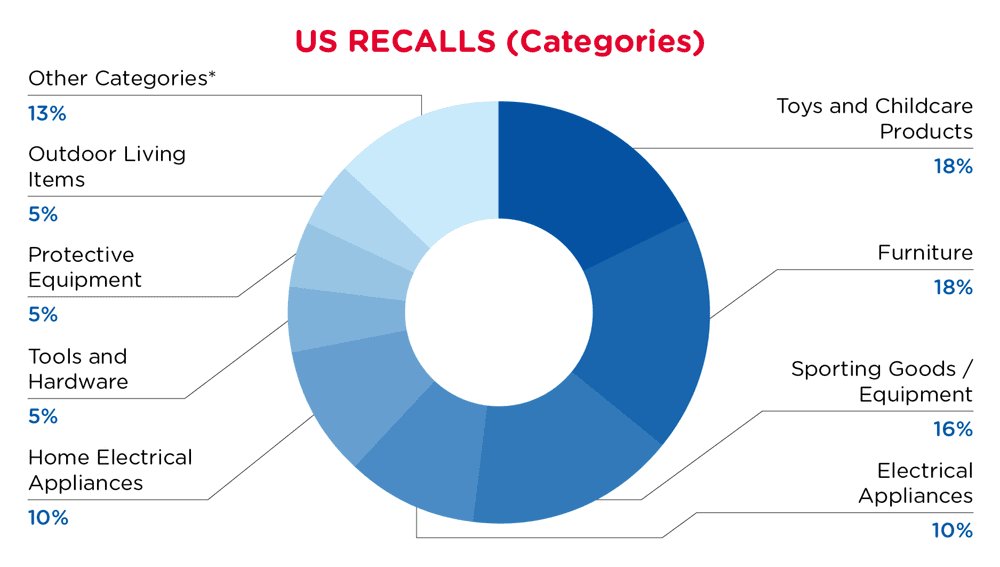
| Product Categories | Frequency |
|---|---|
| Toys and Childcare Products | 7 |
| Furniture | 7 |
| Sporting Goods / Equipment | 6 |
| Electrical Appliances | 4 |
| Home Electrical Appliances | 4 |
| Tools and Hardware | 2 |
| Protective Equipment | 2 |
| Outdoor Living Items | 2 |
| Other Categories* | 5 |
*Other Categories include Machinery, Fabric / Textile / Garment / Home Textile, Chemicals, Computer / Audio / Video / Other Electronics & Accessories and Food Contact Material with a frequency of less than 2.
For a complete list, click here.
In Canada, when hazards are identified in consumer products, they will be recalled and published in the Recalls and Safety Alerts Database on the Health Canada website, which is updated daily. The Canada recalls from 01 May 2026 to 31 May 2026 are summarized below:
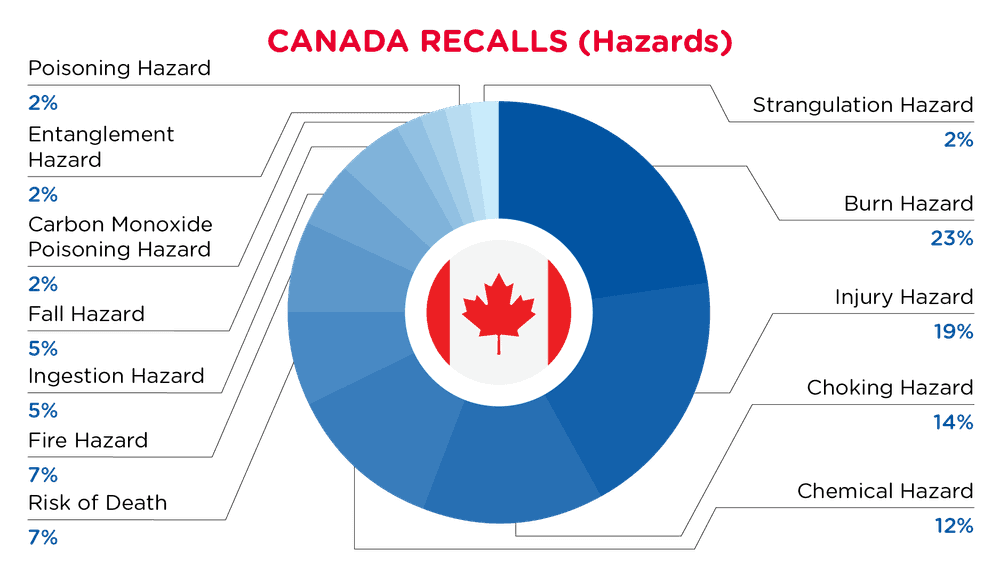
| Hazards | Frequency |
|---|---|
| Burn Hazard | 10 |
| Injury Hazard | 8 |
| Choking Hazard | 6 |
| Chemical Hazard | 5 |
| Risk of Death | 3 |
| Fire Hazard | 3 |
| Ingestion Hazard | 2 |
| Fall Hazard | 2 |
| Carbon Monoxide Poisoning Hazard | 1 |
| Entanglement Hazard | 1 |
| Poisoning Hazard | 1 |
| Strangulation Hazard | 1 |
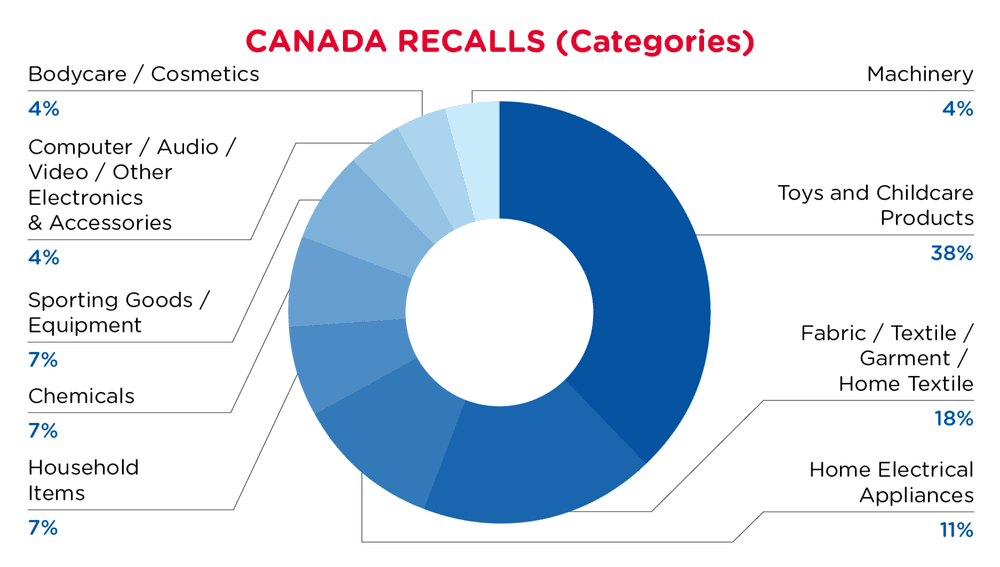
| Product Categories | Frequency |
|---|---|
| Toys and Childcare Products | 11 |
| Fabric / Textile / Garment / Home Textile | 5 |
| Home Electrical Appliances | 3 |
| Household Items | 2 |
| Chemicals | 2 |
| Sporting Goods / Equipment | 2 |
| Computer / Audio / Video / Other Electronics & Accessories | 1 |
| Bodycare / Cosmetics | 1 |
| Machinery | 1 |
For a complete list, click here.
Europe News
02 June 2026 – The European Commission has officially published Commission Regulation (EU) 2026/1168, amending Annex XVII Entry 78 to the REACH Regulation (EC No 1907/2006). This update refines the existing restriction rules under Entry 78 concerning synthetic polymer microparticles (commonly known as microplastics) by expanding certain exemptions for medicinal products and research, while introducing tighter criteria for microparticles enclosed in solid matrices.
Synthetic polymer microparticles are widely used as substances on their own or in mixtures across a variety of industrial, commercial, and consumer applications. Following the initial implementation of the microplastics ban under Commission Regulation (EU) 2023/2055, certain legal ambiguities and unintended regulatory burdens were identified.
Commission Regulation (EU) 2026/1168 published on 02 June 2026, introduces targeted corrections to address these issues, harmonizing the scope of exemptions for specific sectors while ensuring that environmental emission controls remain robust. This effectively amends Annex XVII Entry 78 to the REACH Regulation (EC No 1907/2006) regarding synthetic polymer microparticles. Key updates include explicit alignments for pharmaceutical clinical trials, a newly dedicated exemption for small-scale research and development, and a strict time-bound threshold for solid matrix trapping.
Key changes of REACH Annex XVII entry 78 are summarized as below.
| Key Changes of REACH Annex XVII entry 78 | Effective date |
|---|---|
| Medicinal Products Exemption: The wording has been broadened to explicitly ensure that the derogation covers human and veterinary medicinal products used in clinical trials and related pre-clinical testing (including analytical, toxicological, stability, and batch-release tests). | In force |
| Product and Process Orientated Research and Development (PPORD): A specific exemption has been added for synthetic polymer microparticles used in PPORD activities, provided that the total quantity does not exceed 1 tonne per year. This applies to both conventional industrial sites and non-industrial labs like universities or hospitals. | In force |
| Solid Matrix Incorporation: The exemption for microparticles permanently incorporated into a solid matrix during final use has been tightened. It now applies only if the intended final use has a duration of one year or longer, effectively removing short-term use items from the exemption. | 22 Jun 2028 |
Manufacturers, laboratory personnel, and downstream users handling microplastics or developing formulations embedded in matrices should re-assess their supply chain compliance and documentation to align with these newly clarified thresholds.
On 15 June 2026, the UK Health and Safety Executive added 15 new substances into the UK REACH Candidate List of substances of very high concern for authorization. This is the start for the alignment between current UK and EU REACH SVHCs candidate lists.
The Department for Environment, Food and Rural Affairs (DEFRA) policy announcement on 24 February 2026 marks a strategic shift in the United Kingdom’s (UK's) approach to substances of very high concern (SVHCs) under the UK registration, evaluation, authorisation and restriction of chemicals (REACH) Regulation. The "Interim Principles" established after the UK's exit from the European Union (EU) in 2021 have been officially retired. The UK is now pursuing systematic alignment with the EU REACH Candidate List, reviewing substances added to the EU list since 2021. The UK Registry of Intentions (ROI) is the UK's early warning mechanism, allowing industry to comment on proposed SVHCs and begin substitution planning before formal Candidate List inclusion. Up till now, 26 entries have been added to the UK ROI-SVHC list. These represent the UK's systematic review of substances added to the EU Candidate List since 2021.
Based on the ROI, on 11 March 2026, the UK Health and Safety Executive (HSE) launched its first formal public consultation to add 15 substances to the UK REACH Candidate List. Finally, after the completion of the consultation period, these 15 substances have been included in the current UK REACH Candidate List of SVHCs for authorization on 15 June 2026.
Those 15 new substances (including the reasons of inclusion) are summarized below.
| Substance name | EC number | CAS number | Reason for inclusion |
|---|---|---|---|
| Bis(2-(2-methoxyethoxy)ethyl)ether; tetraglyme | 205-594-7 | 143-24-8 | Toxic for reproduction (Article 57c) |
| Dioctyltin dilaurate [1], stannane, dioctyl-, bis(coco acyloxy) derivs. [2], and any other stannane, dioctyl-, bis(fatty acyloxy) derivs. wherein C12 is the predominant carbon number of the fatty acyloxy moiety (DOTL) | 799-973-9 [group] 222-883-3 [1] 293-901-5 [2] | 3648-18-8 [1] 91648- 39-4 [2] | Toxic for reproduction (Article 57c) |
| 2,2-bis(bromomethyl)propane-1,3-diol (BMP) [1]; 2,2-dimethylpropan-1-ol, tribromo derivative/3-bromo-2,2-bis(bromomethyl)-1-propanol (TBNPA) [2]; 2,3-dibromo-1-propanol (2,3-DBPA) [3] | 799-968-1 [group] 221-967-7 [1] 253-057-0 [2] 202-480-9 [3] | 3296-90-0 [1] 36483-57-5/1522-92-5 [2] 96-13-9 [3] | Carcinogenic (Article 57a) |
| 2-(4-tert-butylbenzyl)propionaldehyde [1] and its individual stereoisomers (2S)-3-(4-tert-butylphenyl)-2-methyl-propanal [2] and (2R)-3-(4-tert-butylphenyl)-2-methyl-propanal [3] (Lysmeral) | 799-970-2 [group] 201-289-8 [1] | 80-54-6 [1] 75166-30-2 [2] 75166-31-3 [3] | Toxic for reproduction (Article 57c) |
| Orthoboric acid, sodium salt | 237-560-2 | 13840-56-7 | Toxic for reproduction (Article 57c) |
| 6,6'-di-tert-butyl-2,2'-methylenedi-p-cresol; [DMBC] | 204-327-1 | 119-47-1 | Toxic for reproduction (Article 57c) |
| Tris(2-methoxyethoxy)vinylsilane | 213-934-0 | 1067-53-4 | Toxic for reproduction (Article 57c) |
| N-(hydroxymethyl)acrylamide | 213-103-2 | 924-42-5 | Carcinogenic (Article 57a); Mutagenic (Article 57b) |
| 2,2',6,6'-tetrabromo-4,4'-isopropylidenediphenol | 201-236-9 | 79-94-7 | Carcinogenic (Article 57a) |
| Barium diboron tetraoxide | 237-222-4 | 13701-59-2 | Toxic for reproduction (Article 57c) |
| Diphenyl(2,4,6-trimethylbenzoyl)phosphine oxide | 278-355-8 | 75980-60-8 | Toxic for reproduction (Article 57c) |
| 2-(dimethylamino)-2-[(4-methylphenyl)methyl]-1-[4-(morpholin-4-yl)phenyl]butan-1-one (Omnirad) | 438-340-0 | 119344-86-4 | Toxic for reproduction (Article 57c) |
| Bis(α,α-dimethylbenzyl) peroxide | 201-279-3 | 80-43-3 | Toxic for reproduction (Article 57c) |
| 6-[(C10-C13)-alkyl-(branched, unsaturated)-2,5-dioxopyrrolidin-1-yl]hexanoic acid | 701-118-1 | 2156592-54-8 | Toxic for reproduction (Article 57c) |
| Tetra(sodium/potassium) 7-[(E)-{2-acetamido-4-[(E)-(4-{[4-chloro-6-({2-[(4-fluoro-6-{[4-(vinylsulfonyl)phenyl]amino}-1,3,5-triazine-2- yl)amino]propyl}amino)-1,3,5-triazine-2-yl]amino}-5-sulfonato-1-naphthyl)diazenyl]-5- methoxyphenyl}diazenyl]-1,3,6-naphthalenetrisulfonate; Reactive Brown 51 | 466-490-7 | - | Toxic for reproduction (Article 57c) |
Because these are already included in the EU REACH SVHCs candidate list, global supply chains should ideally already be tracking them. The primary change is the legal notification requirement specifically within the UK (Great Britain) market.
In Europe, when hazards are identified in non-food consumer products, the products will be recalled and published in the Safety Gate system, which is updated weekly. The European recalls from 01 May 2026 to 31 May 2026 are summarized below:
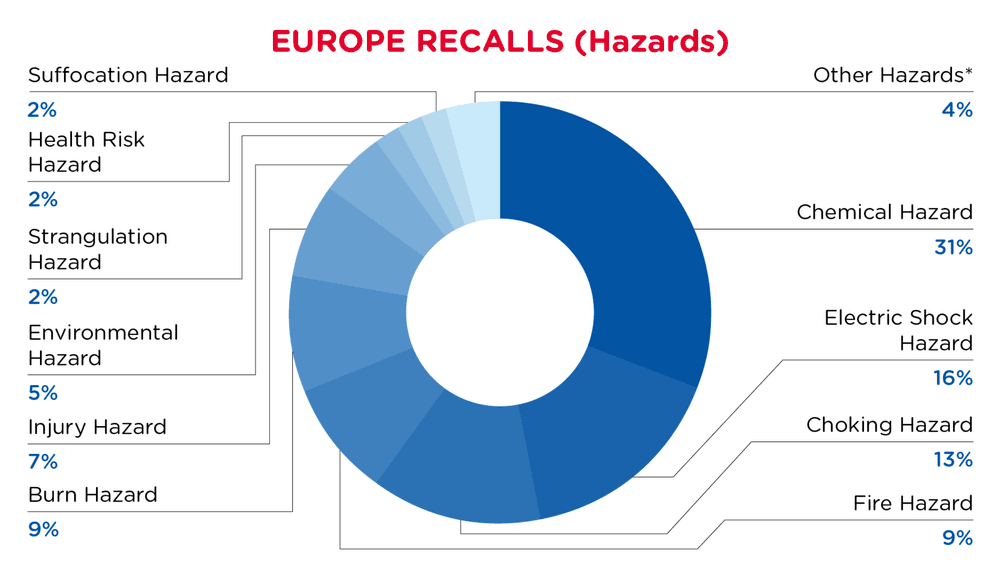
| Hazards | Frequency |
|---|---|
| Chemical Hazard | 88 |
| Electric Shock Hazard | 44 |
| Choking Hazard | 38 |
| Fire Hazard | 26 |
| Burn Hazard | 24 |
| Injury Hazard | 19 |
| Environmental Hazard | 14 |
| Strangulation Hazard | 7 |
| Health Risk Hazard | 6 |
| Suffocation Hazard | 6 |
| Other Hazards* | 11 |
*Other Hazards include Damage to Sight, Entrapment Hazard, Cut Hazard, Damage to Hearing and Drowning Hazard with a frequency of less than 5.
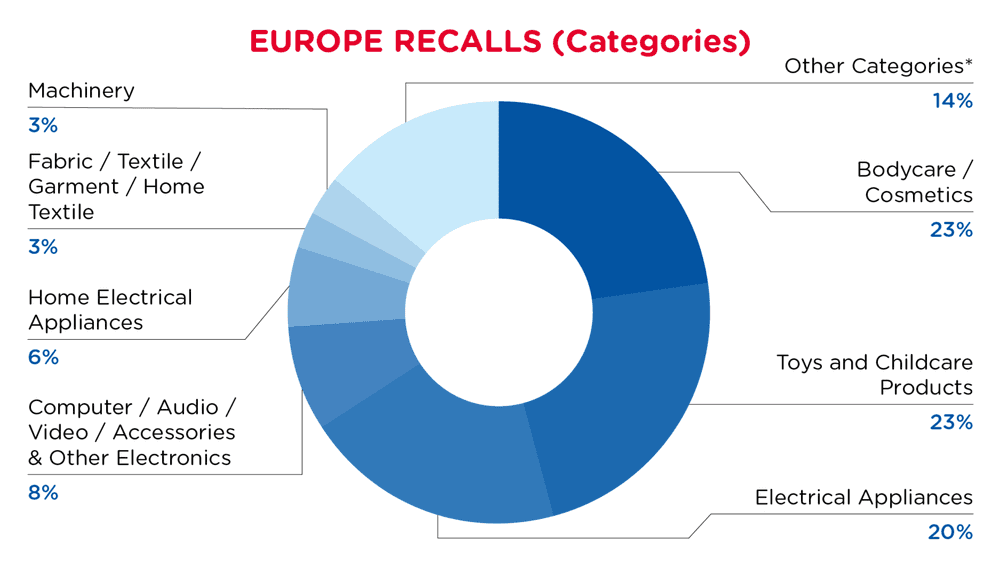
| Product Categories | Frequency |
|---|---|
| Bodycare / Cosmetics | 55 |
| Toys and Childcare Products | 55 |
| Electrical Appliances | 48 |
| Computer / Audio / Video / Other Electronics & Accessories | 19 |
| Home Electrical Appliances | 15 |
| Fabric / Textile / Garment / Home Textile | 8 |
| Machinery | 6 |
| Other Categories* | 33 |
*Other Categories include Furniture, Protective Equipment, Chemicals, Household Items, Sporting Goods / Equipment, Footwear, Accessories, Outdoor Living Items, Jewelry, Food Contact Material and Car Accessories with a frequency of less than 6.
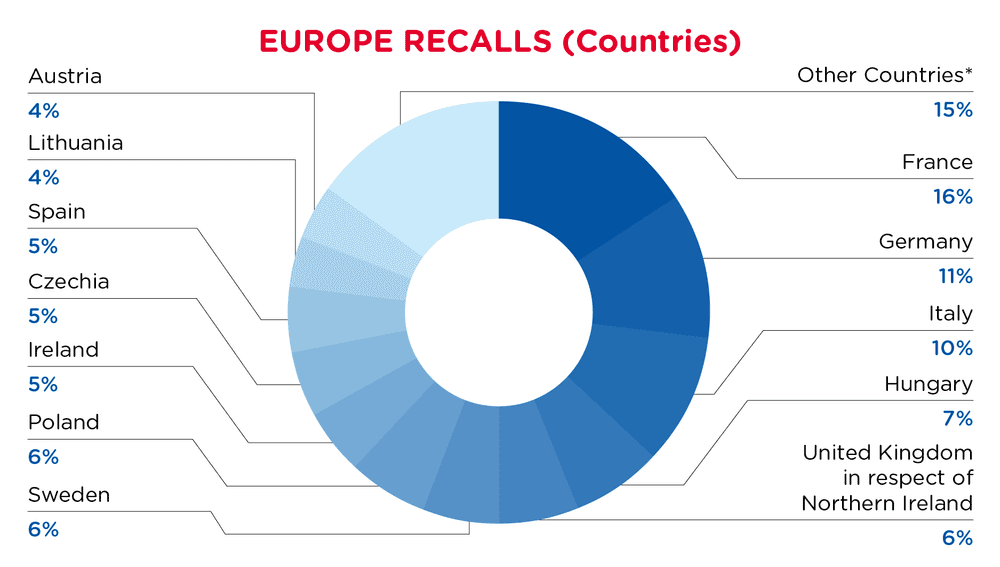
| Notifying Country | Frequency |
|---|---|
| France | 38 |
| Germany | 27 |
| Italy | 24 |
| Hungary | 17 |
| United Kingdom in respect of Northern Ireland | 15 |
| Sweden | 14 |
| Poland | 14 |
| Ireland | 12 |
| Czechia | 12 |
| Spain | 11 |
| Lithuania | 10 |
| Austria | 10 |
| Other Countries* | 35 |
*Other Countries include Greece, The Netherlands, Malta, Denmark, Finland, Slovakia, Croatia, Latvia, Bulgaria, Cyprus and Slovenia with a frequency of less than 8.
For a complete list, click here.
Asia News
On 19 May 2026, the Japanese Cabinet approved an amendment to the enforcement order of Japan's Chemical Substances Control Law (in Japanese), jointly announced by the Ministry of Economy, Trade and Industry, Ministry of Health, Labour and Welfare, and Ministry of the Environment. In alignment with resolutions from 12th Conference of the Parties of the Stockholm Convention (April – May 2025) to eliminate these substances globally, the amendment formally designates four groups of chemical substances as Class I Specified Chemical Substances: (i) Long-chain perfluorocarboxylic acids and their salts, (ii) Long-chain perfluorocarboxylic acids-related substances, (iii) chlorpyrifos, and (iv) Medium-Chain Chlorinated Paraffins.
Key regulatory consequences include manufacturing and import restrictions, product-specific import prohibitions, and mandatory technical handling standards for certain products.
The amendment will be promulgated on 22 May 2026 and enters into force on 22 November 2026.
The Japanese Cabinet approved an amendment to the enforcement order of Japan's Chemical Substances Control Law (in Japanese), which was jointly announced by the Ministry of Economy, Trade and Industry (METI), Ministry of Health, Labour and Welfare (MHLW), and Ministry of the Environment (MOE) on 19 May 2026.
Background:
The amendment is rooted in decisions made at the 12th Conference of the Parties (COP12) to the Stockholm Convention on Persistent Organic Pollutants (April – May 2025), which resolved to globally eliminate Long-chain perfluorocarboxylic acids (LC-PFCA) and its salts, LC-PFCA-related substances, chlorpyrifos, and Medium-Chain Chlorinated Paraffins (MCCP).
Japan's Chemical Substances Council — a joint session of the Pharmaceutical Affairs and Food Sanitation Council's Chemical Safety Subcommittee and the Central Environment Council's Environmental Health Subcommittee — reviewed the four substance groups and concluded that they satisfy all statutory criteria for Class I Specified Chemical Substances under Article 2(2) of the Chemical Substances Control Law because of their: (a) persistence in the environment; (b) high bioaccumulation potential; and (c) long-term toxicity to humans or higher predatory animals.
Key Regulatory Changes:
(1) LC-PFCA and its salts, LC-PFCA-related substances, chlorpyrifos, and MCCP are formally designated as Class I Specified Chemical Substances. This classification imposes: Government authorization required for manufacture and import (prohibited in principle); restrictions on use; and import prohibition for government-designated products containing these substances.
(2) The following product categories cannot be imported into Japan when containing the specified substances:
Lubricating oils and equivalent products when containing LC-PFCA and its salts,
LC-PFCA-related substances,
MCCP;
Wood insecticides when containing chlorpyrifos.
(3) On a provisional basis, fire extinguishers, fire extinguisher agents, and foam fire extinguishing agents, when containing LC-PFCA and its salts or LC-PFCA-related substances, must comply with government-prescribed technical standards for handling.
Transitional Measures:
Appropriate transitional measures and supplementary provisions have been incorporated to allow for a structured compliance transition.
Implementation Schedule:
Promulgation Date: 22 May 2026
Enforcement Date for Items (1)–(3): 22 November 2026 (six months after promulgation)
On 28 May 2026, China's Ministry of Industry and Information Technology (MIIT) published Announcement No. 11 of 2026, releasing the Compliance Management Catalogue for Restricted Use of Hazardous Substances in Electrical and Electronic Products (2026 Edition) ("the Catalogue") and the Exemption List (2026 Edition) ("the Exemption List"). The Catalogue establishes mandatory content requirements for 10 hazardous substances across 33 electrical and electronic product categories, superseding the previous 2018 edition (MIIT Announcement No. 15 of 2018). Compliance deadlines are phased: 10 product categories must comply from 28 May 2026, with the remaining 23 categories required to comply by 1 August 2027. Products qualifying under the Exemption List may follow alternative, application-specific substance limits in lieu of general requirements.
The China's Ministry of Industry and Information Technology (MIIT), together with seven co-issuing government bodies, published Announcement No. 11 of 2026 on 28 May 2026, releasing the Compliance Management Catalogue for Restricted Use of Hazardous Substances in Electrical and Electronic Products (2026 Edition) ("the Catalogue"). The intent of this published announcement is to strengthen the reduction and substitution of hazardous substances in electrical and electronic products at the source. This supersedes the previous 2018 edition (Announcement No. 15 of 2018). Announcement No. 11 of 2026 was issued pursuant to China's Ecological Environment Code (《生态环境法典》) and the Management Measures for Restricted Use of Hazardous Substances in Electrical and Electronic Products.
1. Implementation Timeline (Annex 1)
| Product Categories | Notes | Implementation Date |
|---|---|---|
| 12 types of products under First Batch Compliance Management Catalogue were streamlined and merged into 10 - Air conditioners - Refrigerators - Washing machines - Electric water heaters - Television sets - Surveillance equipment (monitors) - Microcomputers - Mobile phones (handsets) - Telephone sets - Printers, copiers, fax machines & multifunction devices | Exceptions effective 1 August 2027: Laser TVs; Surveillance cameras; Certain microcomputer accessories (e.g., adapters, learning machines, e-ink tablets); Separately sold mobile phone accessories; Single-function scanners | 28 May 2026 |
| 23 newly added product categories - Industrial washing machinery - Air purifiers - Water dispensers - Dishwashers - Electric ovens - Microwave ovens - Rice cookers - Vacuum cleaners - Robot vacuum cleaners - Domestic gas instant water heaters - Projectors - Laser TVs - Smart speakers - Electronic smart locks - Servers; Network switches & routers - Smart watches & fitness bands - Earphones & headphones - Portable power banks - Reading/writing desk lamps - Electronic toys - Electronic blood pressure monitor - Blood glucose meters - Hearing aids | Includes all sub-categories with delayed compliance dates from the 28 May 2026 phase | 1 August 2027 |
Note: Products listed above, if used as components of products not covered by this catalogue, fall outside the scope of implementation of China RoHS. However, if such products are sold separately on the market without a specified end use, they shall fall within the scope of the implementation of China RoHS.
2. Exemption List
The Exemption List (Annex 2) permits certain restricted substance applications subject to specified limits.
| Substance | Exempted Scope |
|---|---|
| Mercury | In lamps (e.g., fluorescent lamps, discharge lamps, HLDTs) with specific per-lamp mercury content limits |
| Lead | - CRT glass - Fluorescent lamp glass - Steel and aluminum alloys - Copper alloys - High-melting-point solders - Various electronic components (piezoelectric ceramics, dielectric capacitors, optical glass, crystal glass, etc.) - Lead and Cadmium combined in filter glass - Borosilicate glass printing inks |
| Cadmium | - Electrical contacts - High-power speaker solder joints - Color-conversion LEDs - Quantum dots (with per-area content limits); |
| Hexavalent chromium | As an anti-corrosion coolant in absorption refrigerators (≤0.75% w/w) and gas absorption heat pumps (≤0.7% w/w) |
| Phthalates | - Electronic medical devices for repair or refurbishment within a closed loop - Auditable business-to-business recycling system |
Note: Products qualifying under the Exemption List may follow alternative, application-specific substance limits in lieu of general requirements.
3. Requirements and Test Methods:
Requirements
Mandatory National Standard: GB 26572–2025 – Requirements for Restricted Use of Hazardous Substances in Electrical and Electronic Products, which includes four phthalates (DEHP, BBP, DBP, and DIBP), will be implemented on 1 August 2027, and will supersede current voluntary standard of GB/T 26572–2011, Limits of restricted substances in electrical and electronic products, on the same date.
Products manufactured or imported before 1 August 2027, may continue to be sold and used. Starting from the 13th month after the implementation of GB 26572–2025, all manufactured or imported products must comply with the new requirements of GB 26572–2025.
Testing methods
GB/T 39560 series: Determination of certain substances in electrical and electronic products, which is fully aligned with IEC 62321 series: Determination of certain substances in electrotechnical products, with the objective to utilize the best common practices for testing electrical and electronic equipment.
Cabinet Office Notification No. 95 of May 2025 introduced a revision to the Specifications and Standards for Foods, Additives, etc. (MHLW Notification No. 370 of 1959) established under the Food Sanitation Act (Act No. 233 of 1947, commonly called the Japan Food Sanitation Law, JFSL).
On 30 May 2025, Japan issued Cabinet Office Notification No. 95, an amendment to the Ministry of Health, Labor and Welfare (MHLW) Notification No 370 of 1959, the Specifications and Standards for Foods, Additives, etc. This was established under the Food Sanitation Act (Act No. 233 of 1947). This Act is commonly referred to as the “Japan Food Sanitation Law (JFSL).
The enacted revisions mainly concern the following under specified clauses to Section 3 ‘Apparatus and Containers/Packaging’ under MHLW Notification No. 370 of 1959:
1. Under Clause B:
Test methods have been removed or revised; related reagents and chemicals required in Clause C have been updated accordingly
Simulants used in migration were added:
| Food Type | Simulant |
|---|---|
| Fats, Oils, Fatty Foods, Creams | Heptane |
| Alcoholic Beverages, Milk | 20% ethanol |
| Acidic food other than Oils, Fats, Fatty Foods, Cream, Alcoholic Beverages, and Milk | 4% acetic acid |
| Foods other than those mentioned above | Water |
2. Under Clause D:
For general specifications of synthetic resin utensils, containers and packaging, the requirements of Potassium permanganate consumption were removed, but overall migration was added
Potassium permanganate consumption is listed as a specific requirement of regulated plastics
The revised requirements come into force on 1 June 2026. A transitional grace period applies until 1 June 2027; during this period, food‑contact utensils, containers, and packaging that have been sold, manufactured, or imported for sale or business use may still meet the earlier standards.
In March 2026, South Korea's food safety agency released a new notice (No. 2026-24). This notice updates the country's safety rules for food containers, packaging, and kitchen utensils, replacing the old rules from Notice No. 2024-29.
South Korea’s Ministry of Food and Drug Safety (MFDS) updated the country’s safety rules for food containers, packaging, and kitchen utensils, replacing those listed in Notice No. 2024-29. The new rules are contained in Notice No. 2026-24 which was introduced in March 2026.
Main amendments introduced by notice No. 2026-24:
1. Added a new section (Section I) to define multiple terms, aiming to resolve inconvenience for users, including businesses and testing institutions.
2. Clarified the requirement of phthalates of (DEHP, CAS 117-81-7) and (DEHA, CAS 103-23-1) for PVC materials:
DEHP is prohibited, except when there is solid proof that DEHP will not transfer from the material into the food. For migration test, DEHP shall not be detected.
DEHA is prohibited in wraps specifically. For migration test, DEHA shall not be detected.
3. Defined criteria for Polypropylene (PP) recycled food containers.
Material source: The recycled PP must come exclusively from food-contact items that are made of 100% PP.
Traceability: It is required to fully track the history of the recycled material (where it came from).
Printing and adhesives: The original items cannot have direct printing on them. The only exception is if special non-sticky ink (which can be removed by heat and alkali) is used. Glues or adhesives are never allowed.
Cleaning: The items must be washed thoroughly with detergents, following the strict cleaning rules set out in South Korea's Sanitary Products Control Act.
Separate management: This closed-loop PP recycling system must be run completely separately from all other types of plastic recycling.
For point 1 and point 3 above, the revised requirements come into force on 27 March 2026.
For point 2 above, the revised requirements come into force on 27 March 2027.
In China, when hazards are identified in consumer products, they will be recalled and published in the SAMR Defective Product Administrative Centre, which is updated daily. The China recalls from 01 May 2026 to 31 May 2026 are summarized below:
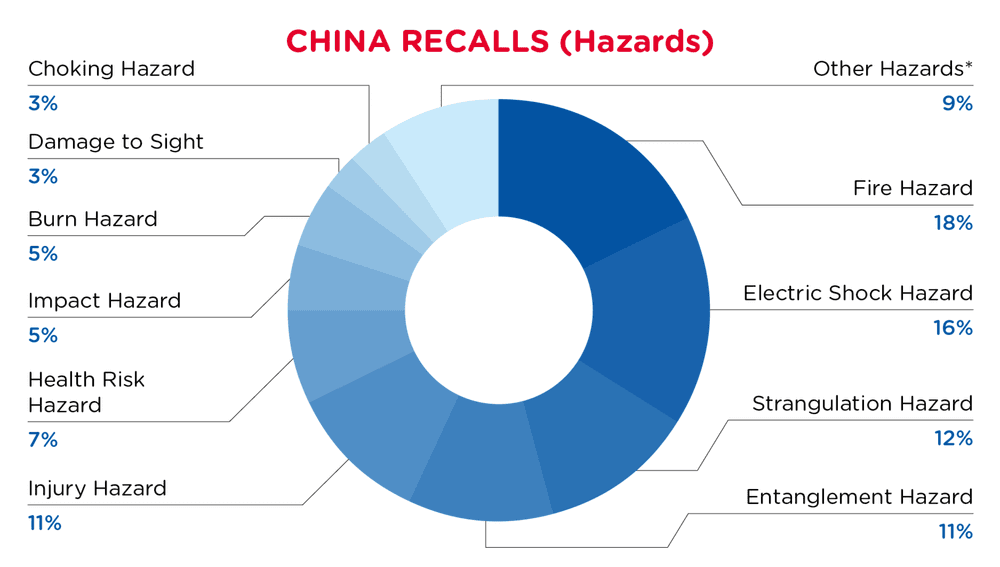
| Hazards | Frequency |
|---|---|
| Fire Hazard | 10 |
| Electric Shock Hazard | 9 |
| Strangulation Hazard | 7 |
| Entanglement Hazard | 6 |
| Injury Hazard | 6 |
| Health Risk Hazard | 4 |
| Impact Hazard | 3 |
| Burn Hazard | 3 |
| Damage to Sight | 2 |
| Choking Hazard | 2 |
| Other Hazards* | 5 |
*Other Hazards include Laceration Hazard, Carbon Monoxide Poisoning Hazard, Suffocation Hazard, Chemical Hazard and Fall Hazard with a frequency of less than 2.
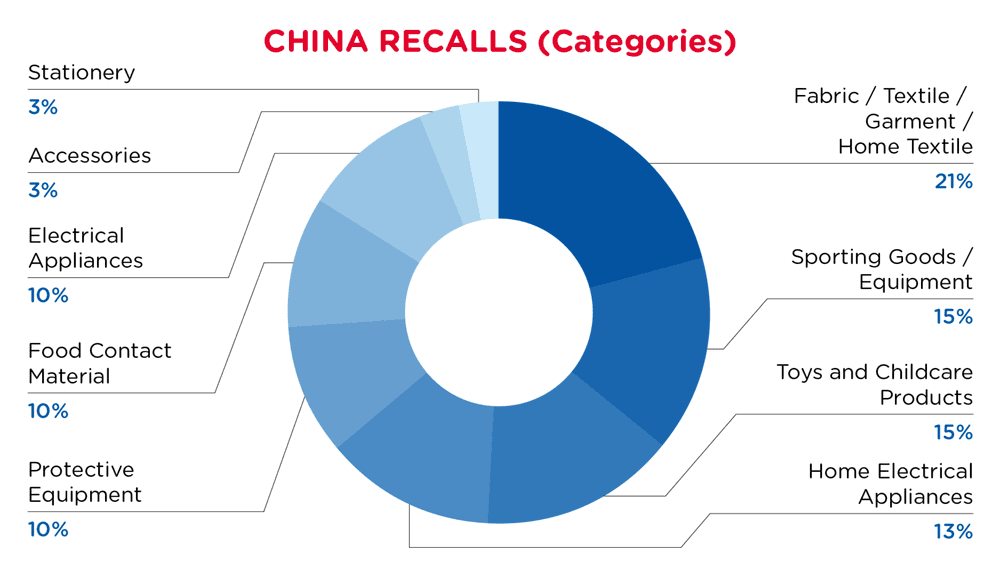
| Product Categories | Frequency |
|---|---|
| Fabric / Textile / Garment / Home Textile | 8 |
| Sporting Goods / Equipment | 6 |
| Toys and Childcare Products | 6 |
| Home Electrical Appliances | 5 |
| Protective Equipment | 4 |
| Food Contact Material | 4 |
| Electrical Appliances | 4 |
| Accessories | 1 |
| Stationery | 1 |
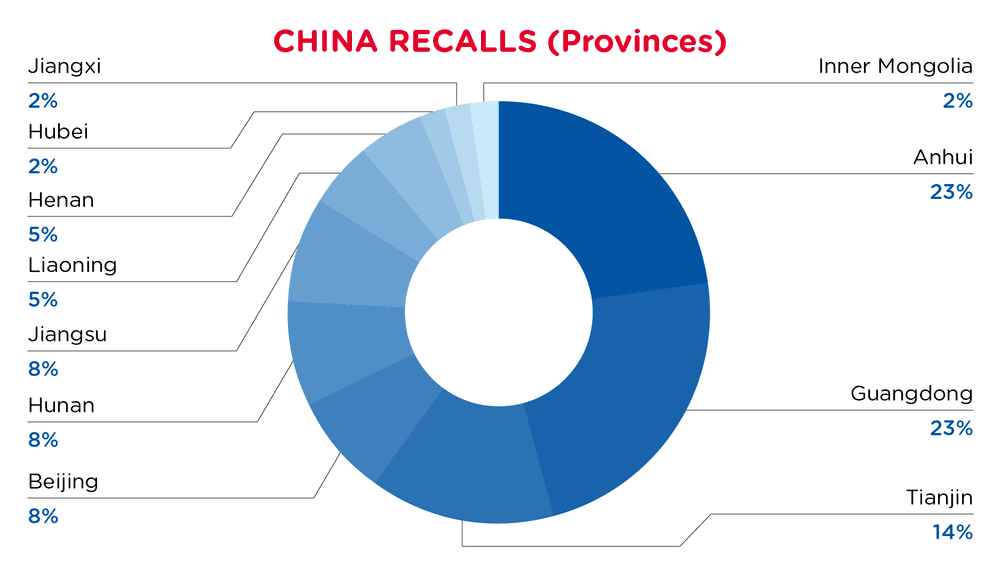
| Provinces | Frequency |
|---|---|
| Anhui | 9 |
| Guangdong | 9 |
| Tianjin | 5 |
| Beijing | 3 |
| Hunan | 3 |
| Jiangsu | 3 |
| Liaoning | 2 |
| Henan | 2 |
| Hubei | 1 |
| Jiangxi | 1 |
| Inner Mongolia | 1 |
For a complete list, click here.
Australia/New Zealand News
In Australia, when hazards are identified in consumer products, they will be recalled and published in the Recalls and Safety Alerts Database on the Australian Competition & Consumer Commission website, which is updated daily. The Australia recalls from 01 May 2026 to 31 May 2026 are summarized below:
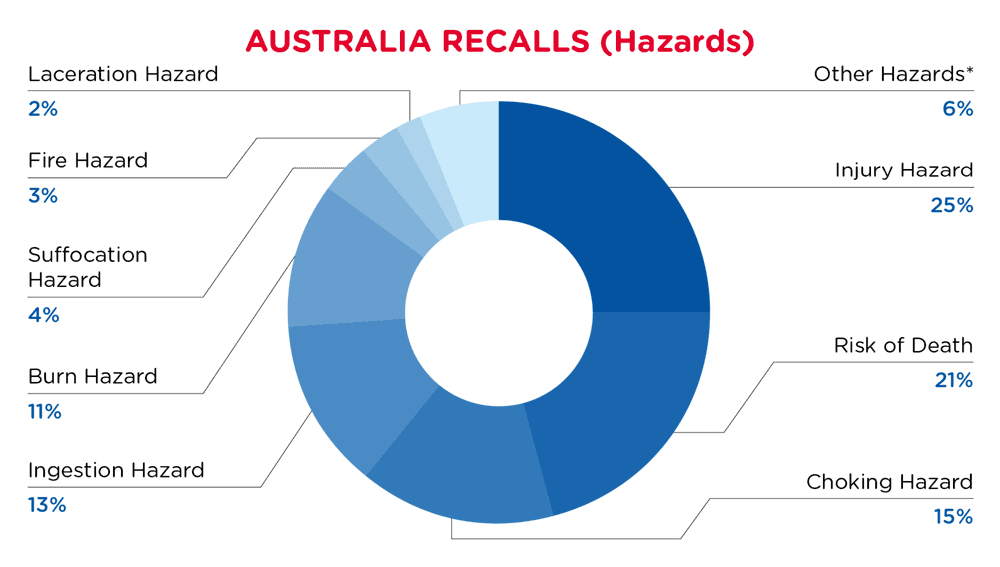
| Hazards | Frequency |
|---|---|
| Injury Hazard | 24 |
| Risk of Death | 20 |
| Choking Hazard | 15 |
| Ingestion Hazard | 13 |
| Burn Hazard | 11 |
| Suffocation Hazard | 4 |
| Fire Hazard | 3 |
| Laceration Hazard | 2 |
| Other Hazards* | 6 |
*Other Hazards include Crash Hazard, Chemical Hazard, Skin Irritation Risk, Fall Hazard, Tip-Over Hazard and Strangulation Hazard with a frequency of less than 2.
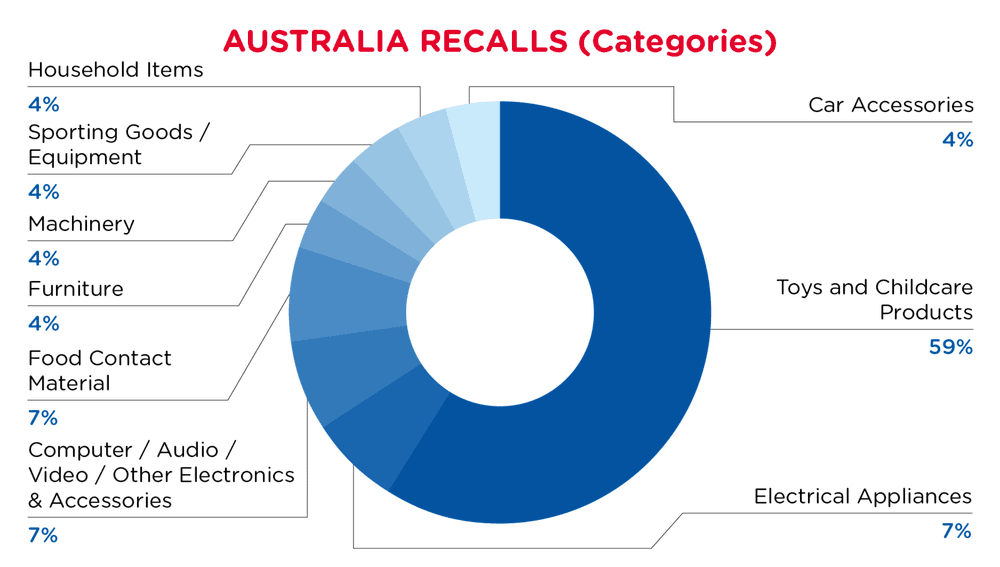
| Product Categories | Frequency |
|---|---|
| Toys and Childcare Products | 16 |
| Electrical Appliances | 2 |
| Computer / Audio / Video / Other Electronics & Accessories | 2 |
| Food Contact Material | 2 |
| Furniture | 1 |
| Machinery | 1 |
| Sporting Goods / Equipment | 1 |
| Household Items | 1 |
| Car Accessories | 1 |
For a complete list, click here.
Subscribe to our Regulatory Updates
Unsubscribe at any time. Read our privacy policy.